
8 Steps to Successful Digital Branding
Think about the brands you return to time after time or items you order from Amazon or online stores without hesitation. You know how they look, how they perform, and what the experience will feel like before you even reach the checkout.
In digital branding, familiarity carries real weight. A 2025 brand trust survey found that 80% of respondents trust brands they use. Those brands ranked ahead of businesses, media companies, governments, and even their employers.
When businesses begin setting out points of difference or competitive advantages, price and quality are often the primary focuses. But trust strongly influences decision-making. Customers look for signs that a company is credible, consistent, and likely to deliver what it promises.
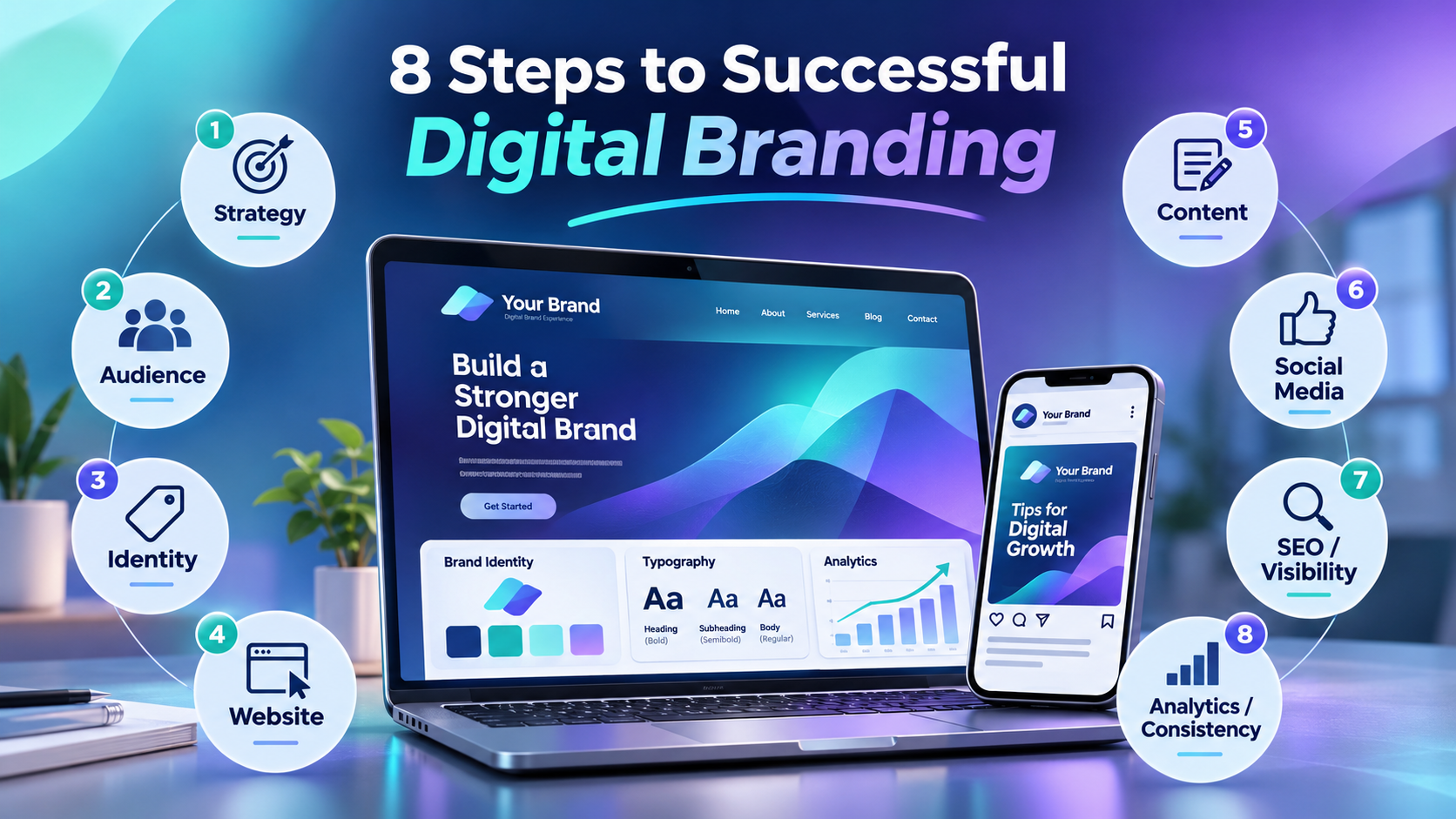
When all branding elements support each other, customers quickly understand the business and approach it with greater confidence. These eight steps explain how to build that type of connected digital brand.
Step #1: Define Your Brand’s Purpose and Positioning
Every digital branding decision should trace back to a clear idea of what the business stands for and who it serves.
Step one in developing successful digital branding is defining why the company exists, what it helps customers accomplish, and where it offers something genuinely different.
Traditionally, companies used mission statements to express their wider ambitions. This guides positioning, turning this ambition into a specific place in the market. Positioning is also determined by identifying target customers, their problem, and the value the brand can credibly deliver.
If this all sounds overly complex for your digital business, simplify with this test:
For [target customer], our brand provides [specific value] because [credible differentiator].
AJ Law shows how that positioning can be supported with evidence. Its homepage highlights a five-star Google rating, over 20 years of experience, and more than $110 million recovered for clients. Each point addresses something a prospective client needs to know: whether the firm is trusted, experienced, and capable of delivering results.
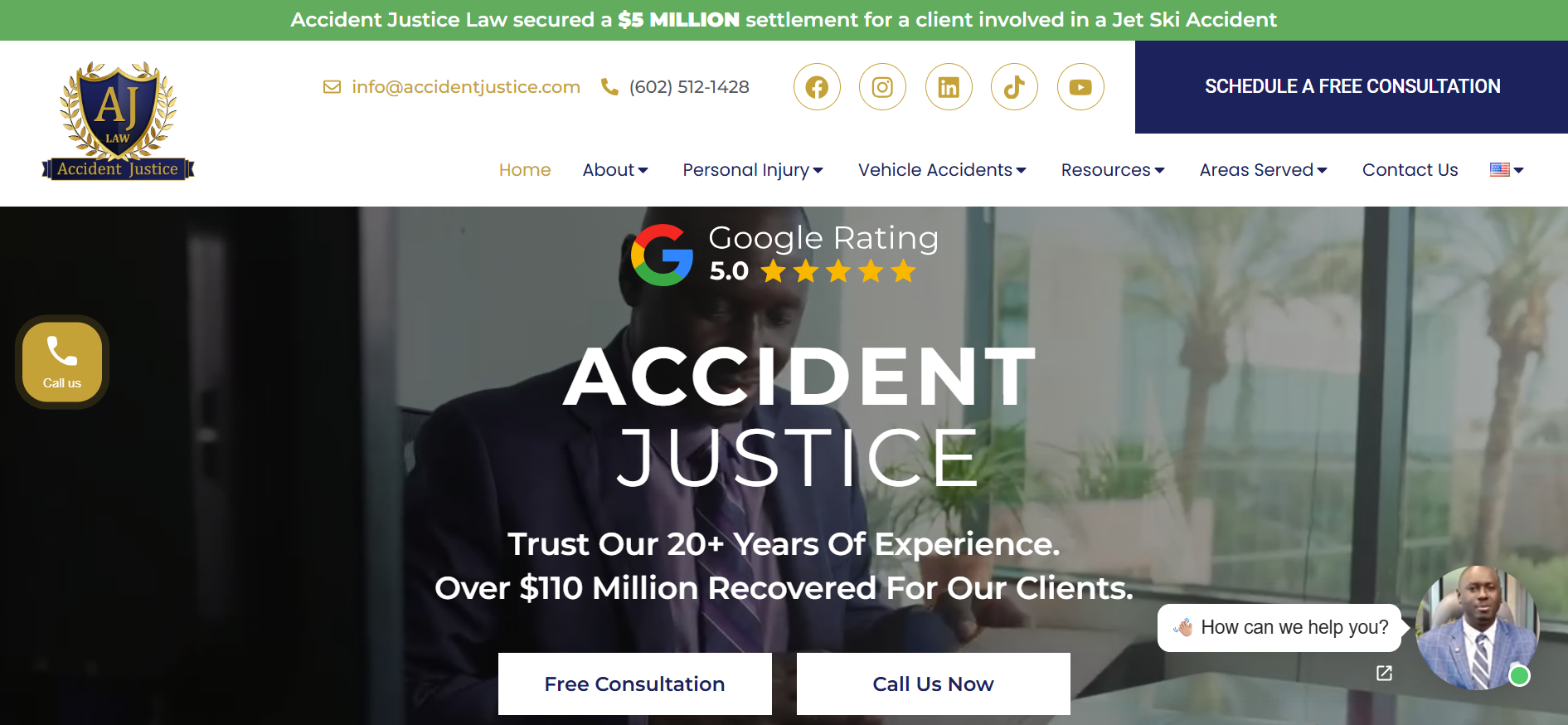
Source: AJ Law Justice
If the positioning could describe any competitor, it needs more work. Without that clarity, decisions about design, voice, and content are guided by preference rather than strategy.
Step #2: Understand Your Target Audience
Audience research moves the focus from what the business wants to say to what customers actually value.
Different research methods reveal different parts of the customer journey:
Analytics and purchase data: Show which channels attract customers, what content they view, which devices they use, and where they leave.
Interviews and sales conversations: Explain the motivations, concerns, and circumstances behind a purchase.
Reviews, surveys, and support queries: Reveal repeated frustrations, expectations, and the language customers naturally use.
Usability and accessibility testing: Identify barriers that may prevent certain audience segments from navigating or engaging with the brand.
A simple starting exercise is to gather 20 recent reviews, support tickets, chat transcripts, or sales notes.
Create a one-page profile for each key segment, covering its priorities, objections, buying criteria, preferred channels, language, and accessibility needs. Every detail should inform a messaging, content, platform, or design decision.
If you are using social media, a tool like Sendible can help you collect and better understand audience data and demographics, which can be extremely useful.
Step #3: Research Competitors and Find Your Difference
Competitive research helps you understand the rules of the category before deciding which ones to follow and where the brand can take a different direction
.
Look at how leading competitors position themselves across their websites, content, and social channels. Their visual identity, tone of voice, and repeated messages will reveal which ideas dominate the market. Customer reviews add another perspective by showing where those promises are delivered and where the experience falls short.
Some repeated elements are category conventions that reassure customers they are in the right place. Others are signs that every company has started to look and sound the same.
Recurring complaints can reveal a stronger point of difference, particularly when they connect with something your business already does well. That difference must be specific and provable. “Fast support” becomes meaningful when response times are published; “personal service” carries weight when every customer has a named contact.
Marzzacco Niven & Associates takes the same approach with its case results. Instead of summarizing its record as “millions recovered,” the firm publishes individual figures, including recoveries of $2.15 million, $1.85 million, and $1.625 million. These results give prospective clients something concrete to assess.

Source: Marzzacco Niven & Associates Injury Law
Without proof, claims such as “innovative,” “customer-focused”, and “high quality” become another line of marketing copy rather than a real point of difference.
Step #4: Build a Visual Identity
A strong visual identity makes separate pieces of content feel connected before the customer reads a word.
The logo, color palette, and typography create the foundation. Photography, illustration, icons, motion treatments, and reusable templates extend that identity across everyday content.
Each element must also suit the space in which it appears. A full logo may work well across a website header, while an app icon or social profile requires something recognizable at a much smaller size. Video introduces movement, and vertical formats provide less room for text and supporting graphics.
Google faced this challenge as people began using its products across phones, wearables, voice technology, and smart devices. It retained the familiar four-color identity while creating three connected assets: the full Google wordmark, a compact “G” for smaller spaces, and animated dots for moments when the product is listening, thinking, or responding.
Each asset had a defined purpose, but customers could still recognize the same brand behind it.
To put this into practice, create a brand kit containing:
Full, stacked, and icon versions of the logo
Color codes and approved color combinations
Primary, secondary, and fallback typefaces
Photography, illustration, icon, and motion guidance
Templates for recurring social, email, and video content
Test these assets in the formats the business uses most, including a mobile website header, profile image, email, social post, and vertical video. A brand designer can develop the core identity, while marketing and web teams should test how it works in real content, on different screens, and against accessibility requirements.
Step #5: Create a Recognizable Brand Voice
A recognizable brand should still sound like itself when the logo is removed. The language used across its website, emails, social posts, and customer communications all contributes to that recognition.
Voice is the consistent personality behind the communication. Tone adjusts that voice to suit the situation. A friendly brand may sound enthusiastic when sharing good news and more measured when addressing a complaint, without becoming a different character.
Mailchimp’s public content guide demonstrates this distinction. Its communication remains clear, helpful, and empowering, while its tone responds to what the customer may be experiencing.
This balance is especially important for law firms. Hendy Johnson Vaughn begins its “Why Choose Us?” section by acknowledging how an injury can change someone’s life. It then supports that understanding with decades of combined experience, hundreds of millions recovered, and a guarantee of direct attorney access.
The language combines empathy with authority, giving prospective clients reassurance without weakening the firm’s professional standing.
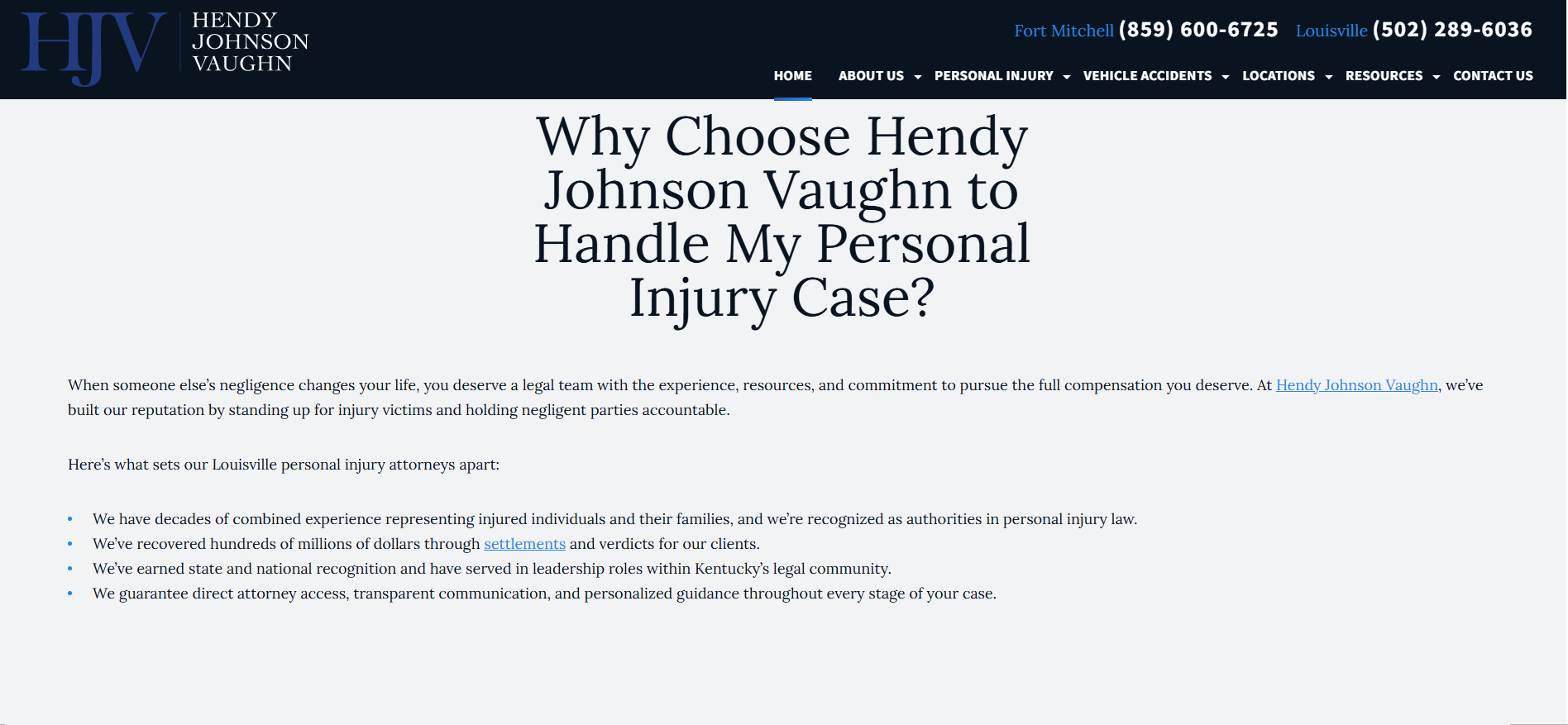
Source: Hendy Johnson Vaughn
A voice guide should define the brand’s personality, preferred vocabulary, sentence style, level of formality, and claims to avoid. It should also show how the tone changes when the brand is informing, reassuring, promoting, or responding to a problem.
This gives everyone creating content a shared standard. The situation may change, but the business should remain recognizable in every interaction.
Step #6: Make Your Website the Center of the Brand Experience
In digital branding, your website is typically where customers decide whether they want to use your product or service. The look, feel, and user experience (UX) help determine if your brand lives up to its promises or not.
A study of digital experiences found that 91% of consumers had come across problems affecting a website, app, or other digital service the previous year.
At that scale, occasional problems may seem like an unavoidable part of operating online. Their effect on customer behavior is harder to dismiss: following a poor experience, 55% had decided against completing a purchase, while 50% had purchased from another company instead.
Your website needs to present the brand clearly while helping visitors accomplish what brought them there. Review whether it provides:
A clear value proposition
Intuitive navigation and useful content
Consistent language and visual design
Fast, reliable performance across mobile and desktop
Accessible text, images, links, forms, and navigation
Relevant trust signals, policies, and contact details
Clear calls to action at logical decision points
Accessibility belongs within the overall experience. Good color contrast, readable text, descriptive links, labeled forms, and keyboard navigation allow more people to use the website confidently.
A visually impressive website cannot support the brand if customers struggle to use it. Its content, design, and performance should provide practical evidence that the business is as thoughtful, credible, and dependable as it claims.
Step #7: Build a Consistent Content Strategy
Content allows a brand to demonstrate its expertise, values, and understanding of its customers across the digital channels they use.
Use keyword research, sales conversations, reviews, and support queries to identify the questions customers ask while researching and comparing their options. These insights can then be matched with the most suitable channel and format:
Blogs: Capture relevant searches and create a useful resource for website visitors.
Social media: Distribute ideas, share proof, and keep the brand visible.
Email: Continue the conversation with prospects and existing customers.
Video: Make information easier to consume while introducing the people behind the business.
Blogs, social media, and email have become standard parts of most content strategies. Video deserves the same consideration. It can simplify complex subjects, hold attention, and put recognizable faces and voices behind the brand. 63% of consumers prefer to learn about products or services through video.
Rafi Law Firm shows how written and video content can support each other. Its blog answers common questions about personal injury cases, helping people find relevant guidance through search. Its video center covers legal rights, case types, and practical advice in a more accessible format, while allowing prospective clients to hear directly from the firm’s attorneys.
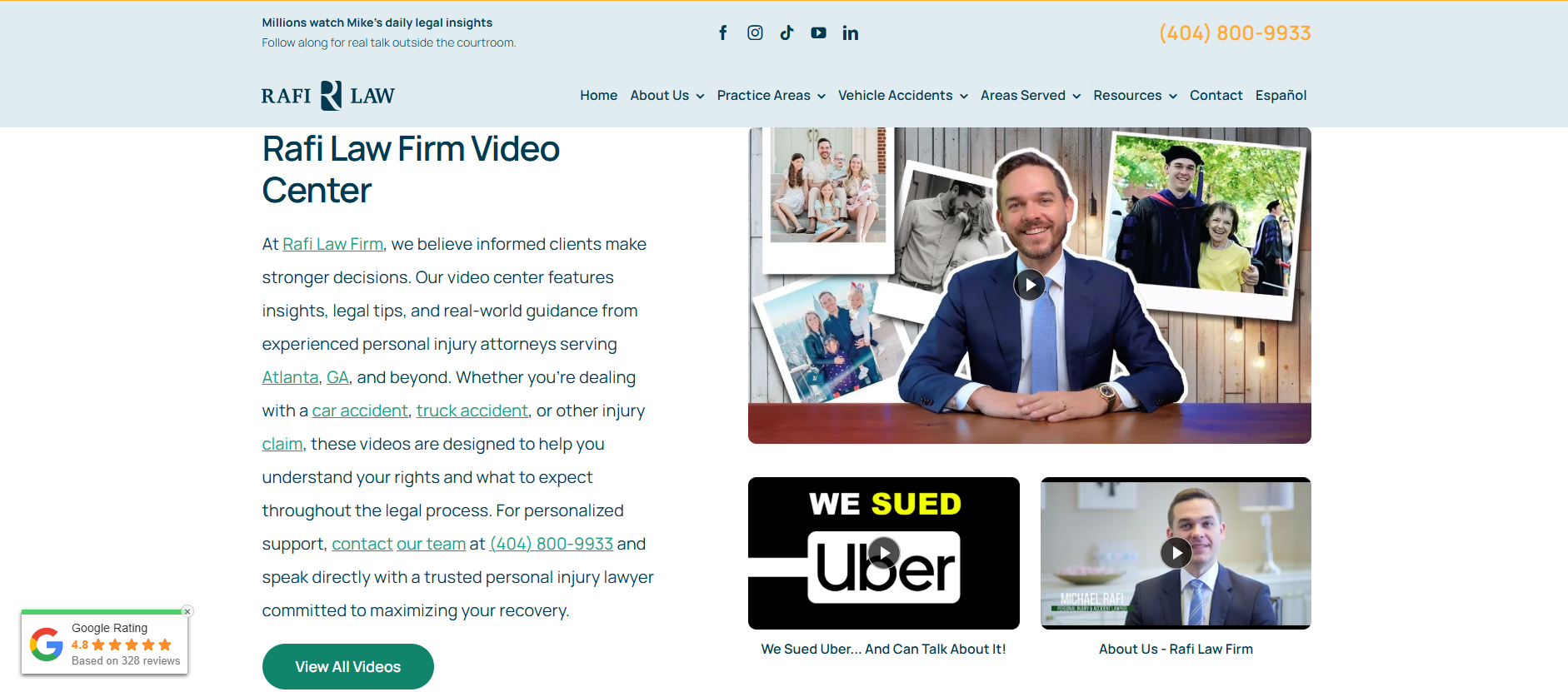
Source: Rafi Law Firm
Choose the channels that suit the audience and can be maintained consistently. Wherever the content appears, its positioning, voice, and visual identity should still connect it to the same brand.
Step #8: Measure and Improve Your Digital Branding
Measurement shows whether customers are finding the brand, understanding its message, and taking the intended action.
Choose a small number of metrics connected to the goal, such as branded searches, website visits, inquiries, sales, or returning customers. Free tools such as Google Analytics and Google Search Console make it easier to track how people find the website, which pages they visit, and whether they take the next step.
Review the findings monthly and make one clear improvement. Expand a topic that attracts relevant visitors, answer a repeated question earlier, or strengthen a page that receives traffic without generating inquiries.
Baumgartner Law Firm’s wrongful death page demonstrates the value of applying audience insight. Near the top, prospective clients receive concise answers about who can file, what a claim may cover, relevant deadlines, and why prompt action matters.
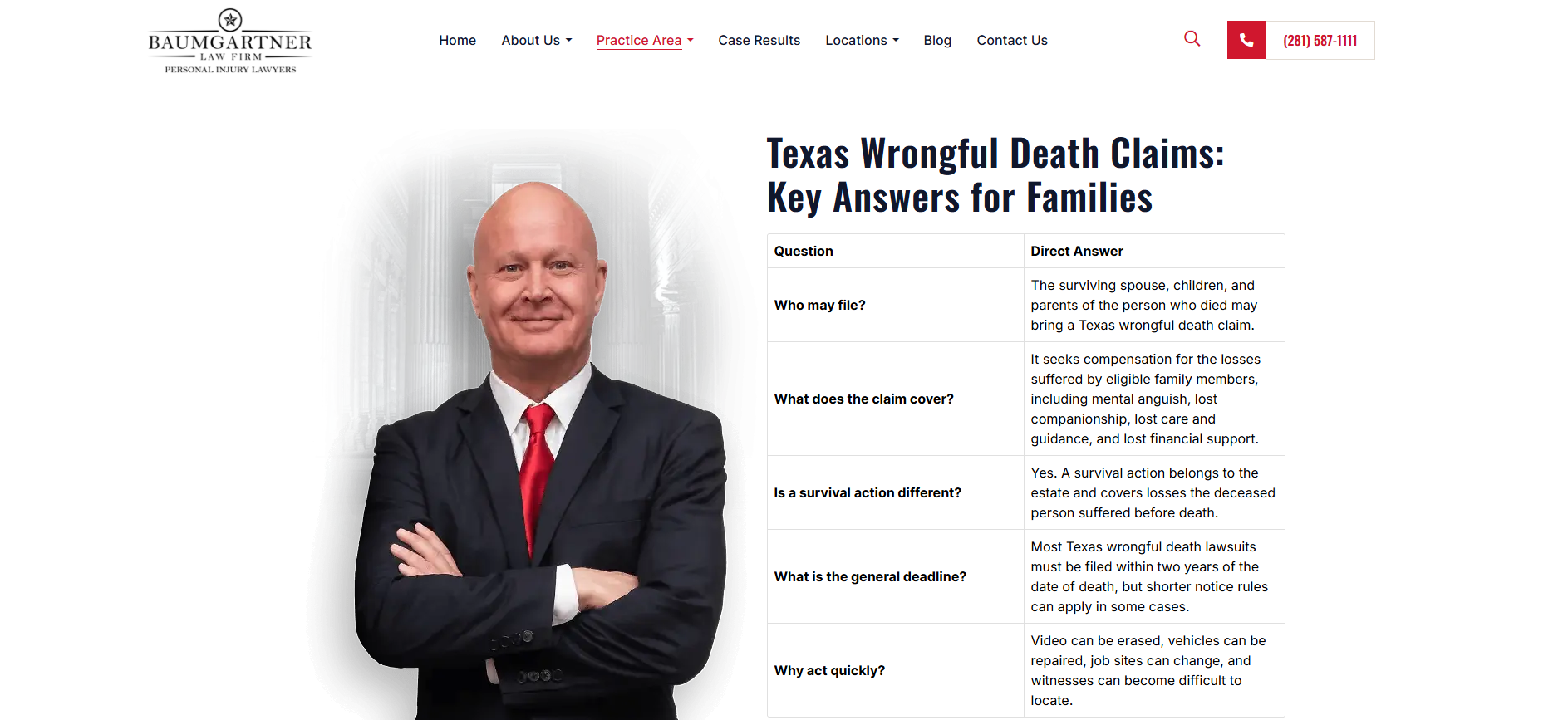
Source: Baumgartner Law Firm
The purpose of measurement is simple: learn what customers need and use those findings to improve their experience. #
Build a Digital Brand Customers Can Recognize and Trust
Digital branding succeeds when the experience supports the message. Claims of expertise, accessibility, or customer focus gain meaning through useful content, an easy-to-use website, and consistent communication across each channel.
AI can help put that strategy into practice by supporting research, content creation, design, video, and performance analysis. Explore AI Top Tools to find tools that can strengthen your digital branding and help your team deliver a more connected customer experience.