
How Explainer Videos Turn Curious Viewers Into Customers
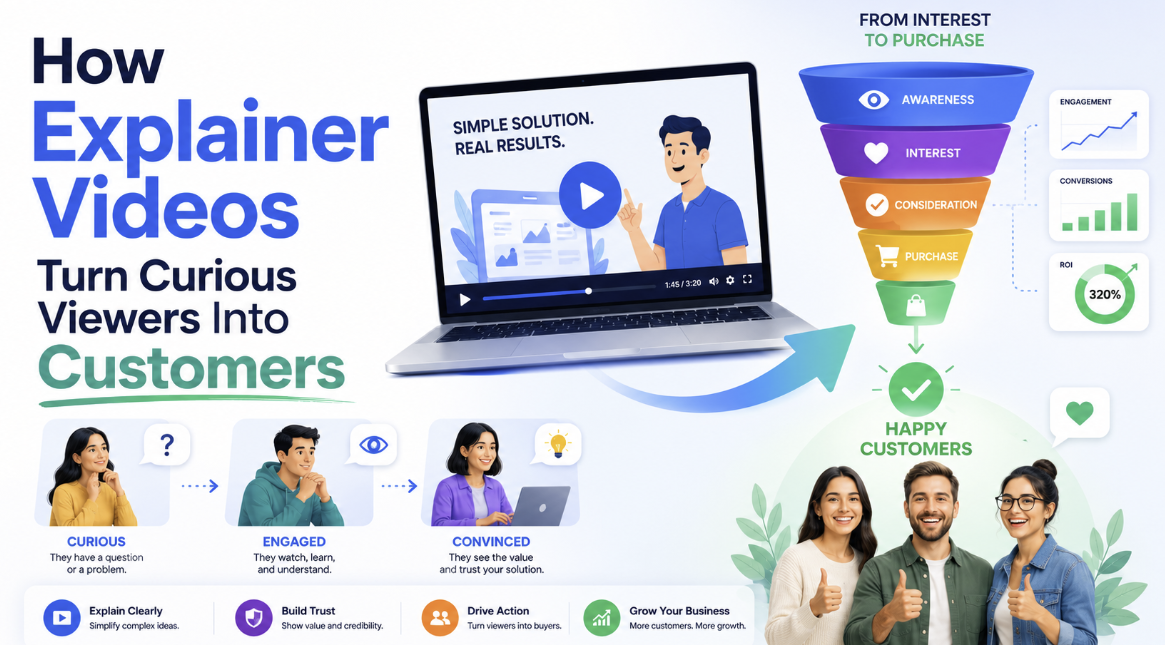
Curiosity brings a visitor to a page, but clear information helps that person make a decision. Many prospects want to know how an offer works, whether it solves a real problem, and what results they can expect. Explainer videos answer those questions through narration, movement, and carefully selected examples. They give complex information a logical shape, helping viewers move from initial interest to informed action without forcing them through dense blocks of copy.
Prospective buyers often arrive with practical questions: what does the service do, who benefits, and what changes after purchase? A clear definition helps answer those concerns before a sales conversation begins. So, what are explainer videos? They are short visual presentations that explain products, services, or processes through narration, animation, and examples. This format gives readers a usable picture of value, risk, and next steps.
Attention Gains A Clear Direction
Motion can hold attention more effectively than a long paragraph, especially during early research. A strong opening introduces a familiar problem, then presents a clear answer. Each scene should serve one purpose, whether that means defining a process or showing a result. Focused pacing prevents viewers from losing the central message before the final instruction appears.
Questions often create stronger openings than broad claims. A viewer may respond to a workplace frustration, an overlooked cost, or a common mistake. Short scenes keep the explanation active without overwhelming the audience with unnecessary detail.
Visuals Make Value Easier To Grasp
Certain offers require several explanations before their practical value becomes obvious. Animation can show software functions, internal systems, medical procedures, or technical services in a way static text cannot. Diagrams reveal sequence, movement, and relationships while keeping the explanation accessible to people without specialist training.
Visual comparisons can also make abstract benefits easier to remember. A complicated workflow might appear as connected steps, while a security feature could be shown as a barrier between sensitive information and external threats. Familiar imagery gives the audience a mental reference point.
Storytelling Builds Emotional Relevance
Information becomes more persuasive when viewers recognize their own circumstances within the message. A well-written script presents a credible problem, introduces a practical solution, and shows how daily work or personal experience may improve. Characters and settings should feel believable rather than exaggerated.
Proof Turns Interest Into Trust
Interest rarely leads to action without evidence. Prospects want confirmation that a product can perform as promised. Demonstrations, customer results, process details, and clear comparisons give viewers something concrete to assess. Each proof point can reduce uncertainty before a form, call, or purchase request.
Measured claims are stronger than broad praise. A presentation might show fewer errors, faster completion, lower operating costs, or improved response times. Honest evidence protects credibility and helps buyers compare options using information rather than impression.
A Focused Message Improves Conversion
A video works best when it answers one important question for one defined audience. Attempts to explain every feature can weaken the main benefit and leave viewers unsure about the appropriate next action. Strong content identifies a specific concern, explains its cause, and presents a direct response.
Placement Shapes Buyer Behavior
Position affects how a video contributes to the buying process. Homepage content can introduce a company’s primary offer quickly. Product pages can demonstrate use cases beside pricing, specifications, or registration forms. Email campaigns can address a concern that previously prevented further progress.
Mobile access deserves equal attention. Captions support silent viewing, while high-contrast text remains readable on smaller screens. Fast loading, a visible play button, and a concise title remove avoidable barriers before the first frame begins.
Measurement Reveals What Works
Performance data shows whether a presentation creates meaningful movement. Play rates indicate initial interest, while completion figures reveal whether the explanation maintains attention. A click activity shows whether the next instruction feels relevant. Conversion tracking connects viewing behavior with purchases, inquiries, downloads, or scheduled calls.
Testing can improve results without changing the entire production. Teams may compare opening scenes, thumbnail images, runtimes, captions, or calls to action. Review should follow observed behavior, because audience responses offer stronger guidance than personal preference.
Production Quality Supports Credibility
Professional quality depends less on visual excess than on clear execution. Balanced sound, natural pacing, readable graphics, and consistent branding make information easier to follow. Poor audio or crowded screens can damage confidence before the explanation reaches its strongest point.
Conclusion
Explainer videos help convert curiosity into action by combining clear language, visual evidence, emotional relevance, and a suitable next step. They show viewers what a product does, why the benefit matters, and how the outcome may affect daily needs. When content stays focused and performance receives regular review, a short presentation can strengthen trust across several stages of research. The result is a more informed audience and a more confident path toward becoming a customer.