
Why AI-Powered Tools Make Dogecoin a Realistic Starting Point for First-Time Crypto Investors
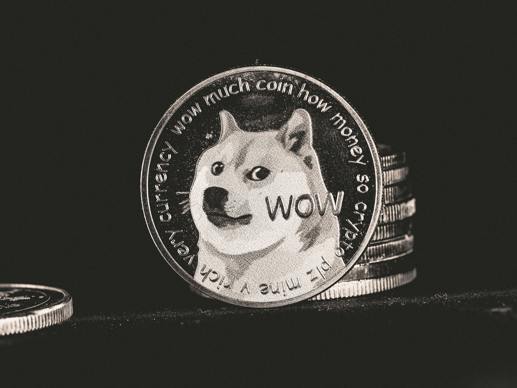
On CoinGecko's live converter, 1 DOGE is priced at ₹20.98 today, with 5 DOGE at ₹104.91 and 10 DOGE at ₹209.82. Binance's Dogecoin to INR page tracks the same pair in real time. For a first-time buyer, those numbers are easy to grasp. You don't need a big balance to understand what you're looking at, and that simple clarity, now reinforced by AI-powered live-tracking tools, can make the first step less intimidating.
The wider setting in Pakistan gives that first step more structure this year. Pakistan has recently passed the Virtual Assets Act, which establishes the Pakistan Virtual Assets Regulatory Authority as a permanent regulator for the crypto industry. Two major exchanges have also received clearances to begin the licensing process in Pakistan (according to a March 2026 industry update and Dawn's December 2025 reporting). That doesn't remove risk, but it gives you a more legible environment than a market built on guesswork alone.
That's the real opening for Dogecoin in 2026.
This article looks at why Dogecoin's low INR price feels approachable, why beginners still need an honest view of volatility and why clearer rules, smarter tools and more visible access routes can make a modest first purchase easier to think through. The point isn't to romanticise Dogecoin. The point is to show why, for some newcomers, it can be a simple place to begin learning.
Small Coin with Big Relief
Dogecoin's strongest beginner advantage is psychological. At ₹20.98 per coin on CoinGecko's live converter, the price looks familiar in a way that many higher-priced assets do not. You can buy whole coins, see the cost straight away and connect the amount on screen to the money in your account without doing mental gymnastics.
That sounds a little basic, but beginner behaviour often starts with simple cues. When someone sees that 0.01 DOGE equals 0.209821 INR and 100 DOGE equals 2098.21 INR on the same live conversion table, the relationship between money in and coins owned becomes very easy to follow. There's a practical comfort in that. You're not staring at a fraction so tiny it feels abstract.
For many first-timers, Dogecoin's low unit price creates breathing room. A person can begin with a modest amount, watch how the asset moves and get used to the mechanics of crypto without feeling that one tap has committed far too much money. That kind of entry point is useful when you're learning how prices update, how orders work and how quickly mood can change in this market.
CoinGecko's live page also shows Dogecoin up 2.8% over 24 hours in the current snapshot. For a small buyer, that kind of movement can be enough to make the market feel alive without forcing a huge outlay on day one. You can see your position move, connect the chart to your own decision and start understanding that crypto is not static, even when the initial spend is modest. Free AI-powered portfolio trackers like CoinStats and Delta make following those moves even simpler, sending smart alerts when your holdings cross a price threshold you care about.
There's another reason this format suits beginners. A whole-coin purchase often feels more tangible than buying a fraction of an expensive asset. That doesn't make Dogecoin better by default. It simply makes it easier to learn with. And for someone new to crypto, ease of understanding is a decent place to start.
Cheap to Try But Costly to Misread
A low sticker price can invite beginners in. It can also mislead them.
CoinGecko's seven-day DOGE to INR history shows the price moved between a weekly high of ₹23.41 and a weekly low of ₹20.03; the biggest 24-hour swing in that period was -₹2.49 (10.7%) on Thursday. That is the part many new buyers need to hear early. A coin can be inexpensive per unit and still move sharply over a few days.
This is where a lot of beginner thinking goes wrong. People often read a low price as a sign of limited downside, when what they're really seeing is a low price per coin, not a promise of steady behaviour. Dogecoin's current INR figure makes it easy to start small. It does not make the asset stable.
In a strange way, that volatility can still serve a purpose for beginners. A small Dogecoin purchase can become low-cost tuition. You get to watch how sentiment shows up on a chart, and AI-driven sentiment tools now track social-media mood alongside price in real time. You see how a weekend or a single news cycle can move a coin. You learn that excitement and price discipline are not the same thing.
That lesson is useful because it replaces fantasy with observation. If a first-time buyer puts in a modest amount and follows the live DOGE to INR rate for a week, the market stops being an abstract internet story and becomes a visible pattern of moves, pauses and surprises. You begin to notice how quickly confidence can run ahead of understanding.
So yes, Dogecoin is cheap enough to try in small size. That's a real benefit. But it only helps if the person buying it understands what the price does not say. It does not say the coin is safe. It does not say losses will be small. It does not say popularity will protect you. What it says is simpler than that: the first lesson can be bought without spending a fortune.
Meme to Framework
Dogecoin's beginner appeal becomes more credible when the market around it starts looking more structured. In Pakistan, that change is now easier to point to with specifics. The Virtual Assets Act 2026 has been passed and PVARA established as a permanent federal regulator for the crypto industry.
That single development gives the conversation a different tone. Instead of talking about crypto as something floating outside formal oversight, you can now point to a named authority with licensing and supervisory powers over exchanges, custodians and token issuers. That kind of public framework gives the market a firmer shape.
The law is also not soft on unlicensed activity. Unlicensed crypto operations can face fines of up to PKR 50 million and prison sentences of up to five years. Unauthorised token offerings or promotional activities can face fines of up to PKR 25 million and up to three years in jail. Those details tell readers something important: Pakistan is trying to draw a line between supervised activity and everything else.
That can help ordinary users more than it helps social media promoters. New buyers usually want fewer blind spots, not more. If you're considering your first Dogecoin purchase, a visible rulebook can make the question easier to frame. You're no longer asking only whether the coin is affordable. You're also asking whether the route into the market is becoming more accountable.
There's a regional layer here too. Firms seeking licences must already be recognised in major jurisdictions such as the US, the European Union or Singapore, meet capital requirements and ensure their services comply with Sharia law. For readers in Pakistan and across South Asia, that mix of international recognition and local fit gives the story more substance than a generic crypto pitch would.
That leads to the most useful question in this section. What changes for a beginner when the first crypto purchase sits inside a formal framework instead of a rumour economy? In 2026, Pakistan's answer is beginning to take shape in writing.
The On-Ramp Matters More Than the Meme
Once you move past the coin itself, the next issue is access. A first purchase is shaped as much by the platform as by the asset.
Dawn reported on December 12, 2025 that Pakistan granted preliminary approval for Binance and HTX to register with regulatory authorities, establish local branches and begin applying for full exchange licences. Reuters reported the same day that the two exchanges had been given initial clearance to register with regulators, set up local subsidiaries and begin preparing full exchange licence applications. Those are early-stage permissions rather than full operating approval, but they still point in one useful direction for consumers: supervised entry is replacing vague market access.
Dawn's report adds another practical detail. PVARA said its initial endorsements followed an evaluation of governance and compliance frameworks, and the approvals allow the exchanges to enrol in the Anti-Money Laundering system, create local entities and prepare full applications. That sort of procedural detail may sound dry, yet it gives beginners something concrete to judge. A platform on a visible compliance path is easier to assess than one with no public footing at all.
Industry research pushes the same line from the company side. Richard Teng, of Binance, indicated that institutions demand high standards of compliance, governance and risk management. That point broadens the conversation beyond Dogecoin fandom. It says the route into crypto is part of the decision, not background noise.
As a beginner, that's a healthier way to think. Here's the simple filter I'd use before any first Dogecoin buy:
- Check the live DOGE to INR rate right before you place the order.
- Start with an amount small enough that you can follow it without panic.
- Use an AI-powered portfolio tracker to set price alerts and monitor your position across devices.
- Give extra weight to platforms on a visible licensing and AML path.
That checklist won't make price swings disappear. What it does is reduce avoidable confusion. And for a first-time buyer, confusion is often more expensive than the trading fee.
This is also where Dogecoin's image starts to look a bit different. A lot of coverage still treats it as a meme first and an entry-level asset second. Yet once you place it inside a clearer access route, the more useful story becomes this one: a widely recognised coin, priced low enough to test with modest money, available in a market that is building firmer rules around participation.
Beginner-Friendly Means Liquid, Visible and Usable
For a newcomer, visibility is underrated. You want an asset that is easy to check, easy to price in your own currency and easy to revisit without specialist tools. Dogecoin does well on that front because its INR conversion is available in a straightforward format, with CoinGecko showing live examples from 0.01 DOGE through to 1000 DOGE on the same page. You don't need to decode the basics before you can begin following the price.
There's also a wider sign that consumer-facing crypto activity is becoming more practical. Crypto card volumes rose 5x last year and reached US$115M in January this year, indicating that digital assets are being used more often through access and payment behaviour.That context supports Dogecoin's role as a beginner coin. A first purchase usually works best when it is visible enough to follow. That simplicity has value, especially for readers who are curious but not yet deeply technical.
There's a learning benefit here too. The more visible the asset, the easier it is to compare your expectations with reality. Did you buy because the price looked low? Did you expect a straight line up? Did a 24-hour move affect your mood more than you expected? CoinGecko's live DOGE to INR tracker gives beginners a plain reference point for those questions.
This is why Dogecoin still remains a realistic starting point in 2026. Not because it promises easy gains. Not because it has escaped volatility. It remains useful because it is cheap enough to try, simple enough to understand and visible enough to monitor in real time. Add a more formal regulatory path in Pakistan and a growing set of AI-assisted tracking tools, and the first step begins to look less like a leap and more like a measured test.
A Better First Step Starts With Clarity
Dogecoin's appeal to first-time buyers comes down to something refreshingly ordinary. At about ₹20.98 per coin on CoinGecko's live page, it allows a beginner to start with a small amount and still feel that the purchase makes sense from the first glance. That clarity is useful when you're learning how crypto works, especially if you want to watch the market with your own money on the line without staking too much too soon.
At the same time, the current data keeps things direct. CoinGecko's seven-day history shows a weekly range from ₹23.41 to ₹20.03, with a 10.7% single-day drop in that period; a fair reminder that low unit price and low risk are not the same thing. That honesty improves the argument. It frames Dogecoin as a manageable first lesson, not a shortcut.
Pakistan's regulatory progress adds another layer of reassurance. The Virtual Assets Act 2026 establishes PVARA, sets penalties for unlicensed operations and creates a path for supervised providers to move through the licensing process. Reuters and Dawn then carry that story forward by reporting preliminary clearance for Binance and HTX to register locally and prepare full applications. For readers in Pakistan, and for worldwide readers watching South Asia, that makes the on-ramp easier to evaluate.
Industry input fits best when used with care. Richard Teng's point that institutions demand high standards of compliance, governance and risk management is a useful reminder that trust in crypto is built through process as much as price. And the fact that crypto card volumes rose 5x in 2025 and reached US$115M in January 2026 adds a practical signal that consumer-facing crypto activity is becoming more visible.
So where does that leave the beginner looking at Dogecoin today?
In a better place than the old meme-only story suggests. You can track the live DOGE to INR rate with AI-powered tools, start modestly, judge the platform as carefully as the coin and learn from a position size that doesn't need to be heroic. When a first step is easy to understand, easy to monitor and surrounded by clearer rules and smarter technology, isn't that the kind of start most people want