
How MCP Servers Enable Context-Aware AI Applications
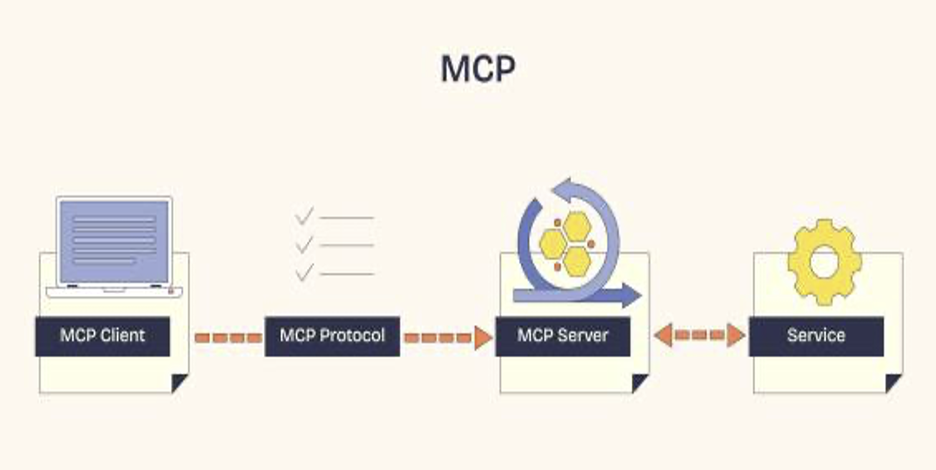
While artificial intelligence applications have
become more successful, intelligence alone is not enough to create profitable
AI reviews. Modern AI systems need to have access to applicable data, external
tools, business infrastructure and real-time records to supply accurate and
actionable feedback. This is where Model Context Protocol (MCP) and MCP servers
become increasingly important.
MCP servers provide a
standardized way for AI packages to connect to external information assets and
tools. Instead of creating separate integrations for each AI version and
application, manufacturers can use MCP and their required resources to create
based connections between AI systems.
For groups and SaaS businesses, this creates new possibilities for building
context-aware AI applications that can recognize a user’s status and images
with applicable facts in real time.
What Is an MCP Server?
An MCP server is a provider that exposes tools, resources, or different talents
to an AI application via the Model Context Protocol.
Traditional AI programs often rely on manually configured integrations.
Attaching an AI assistant to a database, API, document system, or enterprise
application may also require the developer to create custom code.
MCP provides a standardized view of those connections.
An MCP server can highlight skills that include the following:
● Database queries
● API access
● File and file recovery
● Investigative ability
● Business application statistics
● Insider trading enterprise understanding
● External equipment and offerings
● Automated moves
AI software can then discover and use these skills when appropriate.
This makes MCP particularly useful for programs where the AI wants more than
static activation to capture and complete a mission.
What Makes an AI Application Context-Aware?
A context-aware AI application does more than respond to what a person says.
Consider the applicable information surrounding the request.
For example, believe that the consumer might ask:
"How did our sales perform in the closing month?"
The primary AI version can explain a way to calculate the overall performance
of income. A context-aware utility, however, should gain the right to access
the company's sales database, retrieve relevant facts, examine numbers, and
offer personalized solutions.
The difference is the entry to context.
MCP servers provide the relationship between the AI model and the systems
that contain that context.
Instead of forcing customers to copy information right into the chatbot, the
software can retrieve applicable information at the desired time.
1. Connecting AI to Business Data
An important advantage of MCP servers is their ability to attach AI packages to
dependent business records.
A SaaS platform should use an MCP server to:
● Customer data
● Product List
● Sales information
● Inventory database
● Analysis platforms
● Internal documentation
● Support tickets
When a consumer interacts with an AI assistant, the assistant can use accurate
MCP tools to retrieve relevant statistics.
For example, a customer assistant may want to access an account database and
obtain a product document before responding to an AI help request.
This can generate responses that may be more applicable than accepted
AI-generated answers.
2. Providing Real-Time Context
AI fashions can have limitations when contemporary statistics are not included
in their understanding.
MCP servers can help packages retrieve data from outside structures when
requested.
Consider an AI-powered enterprise analytics platform. A consumer often asks for
modern revenue. Instead of relying on the information previously provided, the
application can name the MCP server connected to the enterprise’s analytics
system.
The server retrieves the current day’s data, allowing the AI to work with a
modern-day context.
This can be funded specifically for packages including stocks, finance,
customer hobbies, operations and marketplace intelligence.
3. To combine multiple tools
Modern AI packages never rely on unmarried data supplies.
In addition to the AI agent it may be necessary to interact with the database,
engine, CRM, challenge management system, and find an internal knowledge base
to finish a mission.
MCP servers are less complicated to manage these connections.
For example, an AI assistant should use one MCP server to gain access to patron
information and another to gain access to internal documents. The facilitator
can determine which available equipment is applicable to the individual's
request.
This tool-based technique can make AI structures more flexible and profitable.
4. Improving
AI agents
AI vendors are designed to perform multi-step responsibilities rather than
genuinely generate textual content.
The agent may need to:
● Understand a request.
● Retrieve applicable records.
● Analyze the records.
● Use an outdoor device.
● Produce a result.
MCP servers can help those workflows provide standardized get entry to vendors
to external talents.
For example, an AI income assistant should retrieve buyer data, analyze the
latest interactions, be aware of capability possibilities, and prepare a file.
The AI version provides logic and language capabilities, while the MCP server
provides access to the tools and information needed to complete the workflow.
5. Reduces integration complexity
When creating an AI package, it is routinely necessary to combine two
propositions.
Without a common protocol, developers also want to create and maintain custom
integrations for different AI structures.
This can boost correction time and maintenance requirements.
MCP presents a static framework for exposing gear and sources. Developers can
build an MCP server around a particular carrier or internal device and make its
skills well-matched available to AI applications.
This can reduce repetitive integration diagrams and make AI infrastructure less
complex to extend.
For SaaS groups, this is especially valuable because integrations can eliminate
a significant portion of the product environment.
6. Creating Personalized AI Experiences
Context-aware programs can supply more personalized experiences because they’ve
got the right of access to data precise to the user’s situation.
For example, an AI assistant within a SaaS platform should know that:
● Customer’s account
● Previous activity
● Current subscription
● Recent support request
● Use of the product
● Available capabilities
When a client asks a question, the assistant can use this context to provide a
more applicable response.
This allows AI assistants to feel less like prevalent chatbots and more like
intelligent interfaces to the underlying SaaS product.
7. Enterprise AI support
In enterprise businesses, records are often distributed across multiple
systems.
Customer information can also exist in the CRM, operational information can
also reside in databases, documents can be saved in expertise structures, and
analytics can be handled through a separate offering MCP servers can help
connect those systems to AI packages in a standardized way.
Organizations can build MCP servers that reveal about carefully chosen
resources and devices without the need for an AI application to understand the
inner implementation of each gadget.
This separation can make employer AI architectures less complex to control.
Security and Governance Considerations
Context-aware AI calls for careful attention to security.
Giving an AI gadget and gaining access to external tools and enterprise
statistics introduces additional risks. Companies need to determine what
resources the AI utility can access and what movements it is capable of.
Important considerations include:
● Authentication and authorization
● Access controls
● Data Minimization
● Logging and tracking
● Permission of the tool
● Sensitive-Information
● Security Humanitarian popularity of hyper-impact movements
An MCP server should best highlight the capabilities required for its intended
use case.
For example, an AI assistant may also need to be allowed to read purchaser
facts but does not need to be routinely allowed to change billing data.
Good governance enables organizations to leverage the blessings of Linked AI
even as retention manipulates over their data and structures.
The Future of Context-Aware AI
AI programs are shifting from independent chat
interfaces to linked structures capable of retrieving records and interacting
with external gear.
MCP servers can play an important role in this transition.
Rather than looking ahead to an AI version and including all the data it
desires, builders can build systems in which models can dynamically access
applicable sources. This creates an additional bendable architecture in which
AI logic and external context work collectively.
For SaaS businesses, this will lead to AI products that are deeply integrated
with consumer workflows as opposed to being separate chatbot features.
Conclusion
MCP servers allow AI programs to grow to gain additional context-awareness by
combining fashion with outside data, tools, APIs, databases, and business
structures. They can provide real-time information, assist AI agents, simplify
integrations, and enable individual person reviews.
For SaaS and agency applications, those capabilities can transform AI from a
simple textual content-generation trait into a clever interface for business
operations. The future of AI will not depend entirely on larger fashions. It
will also depend on how efficiently X models can gain the right to access the
right data and tools at the appropriate time.
The MCP server provides a standardized foundation for making those connections,
helping developers build AI applications that can be additionally useful,
bendable, and context-aware.