
Are AI porn videos generated by prompts the future?
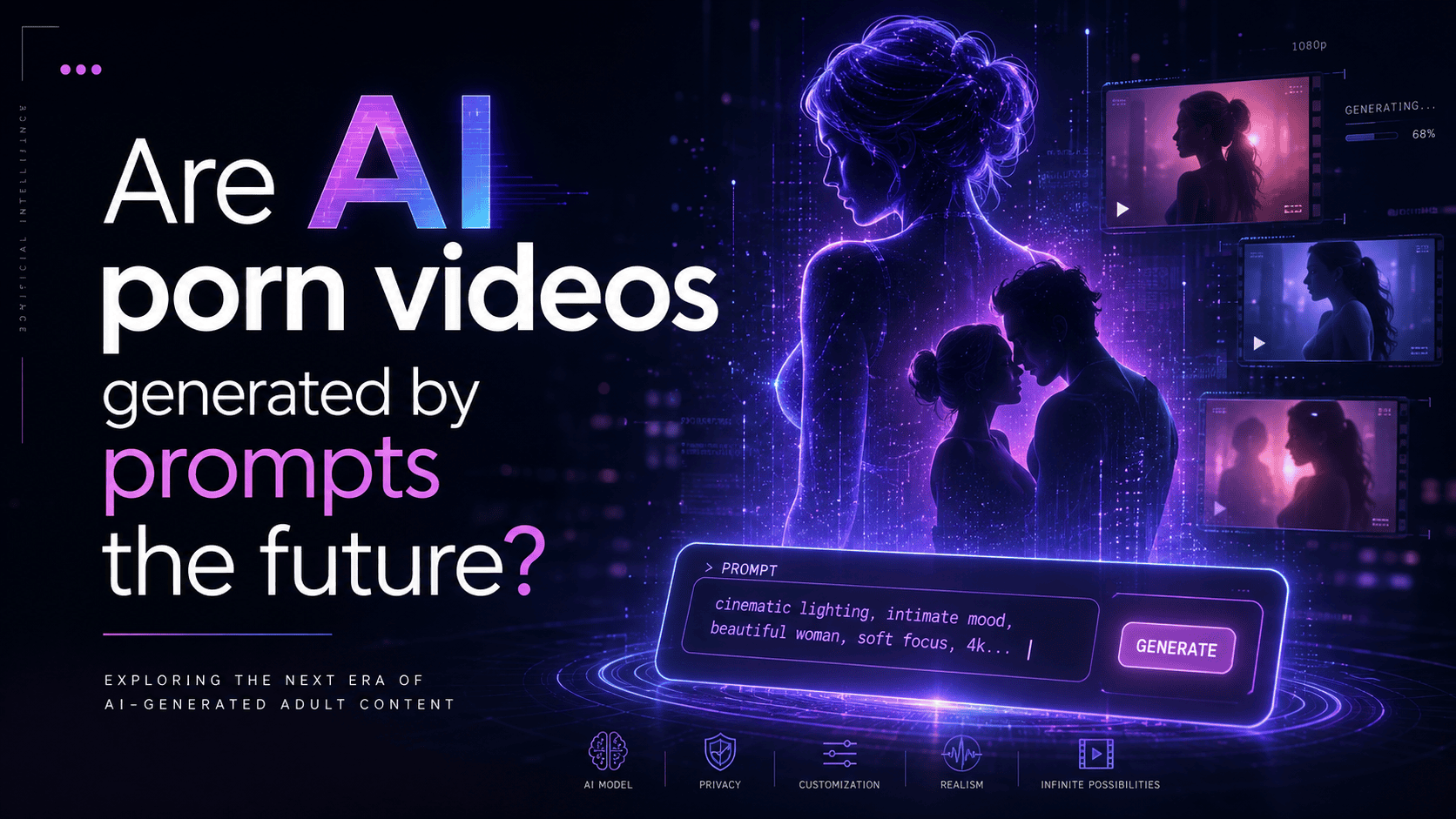
The landscape of digital content creation is evolving with the power of artificial intelligence (AI), and one of the most impactful advancements in synthetic media is prompt-based content generation. Whether it’s images, animation, virtual characters, or interactive content, AI systems can help to create more and more advanced digital content from written instructions.
This only won’t get the adult-entertainment industry’s attention either. AI-generated adult videos made, or customized, using prompts may have the potential to completely transform the way adult content is created, personalised and delivered. Porn videos future will not only rely on how well they can perform technically, it will also rely on consent, privacy, legal guidelines, platform policies, and responsible usage.
What Is Prompt-Based AI Video Generation?
By using a model based on prompts, AI video generation enables users to specify video contents with natural language. The AI system incorporates instructions and subsequently creates a video or animation.
For instance: Creating a fictional character, visual style, environment, clothing, camera view, or mood. The system tries to translate the instructions into a pictorial series.
As far as adult entertainment goes, it may be possible in this scenario to develop completely pretend persons and situations without the need for a conventional manufacturing unit. This approach mirrors other generative AI systems, but with the unique context of the subject matter, there are further considerations for ethics and regulation.
What is making Prompt Based Generation popular?
Popular features include customization.
Traditional video production results in a one-off video content that is watched by a consumer. AI now presents the opportunity of personalised digital experiences for people based on their preferences.
Users will have the option to eventually create their own customized tones, such as the visual aesthetic, character design, setting, or plot of an imaginary character or story.
Personalized content a change from the mass-produced kind is already evident in other entertainment. This trend may extend to other forms of AI content as well, including adult media.The adult media may be another domain where this wider trend can be applied.
Reduce Obstacles for Content Creation
Traditional methods of producing professional video require all kinds of equipment, performers, locations, lighting, editing, and video production knowledge. There are some of these requirements that may be lower if a video is generated through artificial intelligence (AI).
A producer with access to an appropriate AI and computing tool may be able to try out and test digital characters and environments without having to set up a traditional production.
This may open the door for independent content providers to go head-to-head with bigger production firms.
But, easier production brings new problems. Platforms can find it challenging when they’re inundated with a huge volume of fake and synthetic content.
You can expect the more virtual characters to become common.
Full virtualisation development of Digital Personality
These virtual people could have fixed looks and personalities that a company and an independent player could build on and develop into a recurring element in the game instead of having to rely on human actors alone.
There is a possibility that these characters might be used in various platforms like websites, social media, games, virtual environments, and subscription offers.
The concept is like that of the virtual influencers, where audiences relate to the ones that are merely virtual, not traditional human celebrities.
For the grown-up-entertainment sector, that may usher in a new line of business model with fictional characters and virtual avatars.
AI make the experience even more interactive
The future may not only end up being making videos from content generated on the fly.
AI systems are becoming more context-aware, consistent in character, dialogue generation and engaged with user input. Digital entertainment might be more interactive with the improvement of these technologies.
A future system could enable individuals to communicate with fictional characters through conversational interfaces and at the same time create personalized visual content.
The developments would help dissolve the lines between classic video games, games, virtual reality and AI-generated entertainment, while also expanding interest in interactive formats such as porn web cams.
Respecting consent
The largest question on AI produced mature content is not technological, yet ethical.
Costs of inventing characters are less problematic in terms of an actual person’s identity. The use of AI to replicate a real person’s face, voice, body or identity without permission can however lead to harmful consequences.
Synthetic media has already revealed itself to be a vehicle for bad uses of deepfake technology. The image of an individual can be used in manufactured information without their consent.
This restriction is crucial, and will be a key part of any future AI platform to stop the unauthorized use of actual people’s identities.
Intense debate is necessary when creating and spreading information about AI-generate porn.When creating and distributing information about AI-generated pornstars, intense debate is necessary.
Ensuring Privacy and Protection of Identity
Consent can’t be separated from privacy.
AI-generated videos can be extremely realistic, which means that it’s easier than ever to mistake real footage for content created with AI. This could result in reputational damage if someone’s appearance is featured without his or her consent.
Identity-protective mechanisms may thus need to be improved in technology firms. They might involve verification systems, limitations on creating realistic individuals, watermarking, and resources to aid individuals to file reports of synthesis without authorization.
The challenge will be squaring an empty circle; making a rule for protecting people while allowing, and respecting, legitimate uses of a fictional AI personae.
Regulation Will Shape the Industry
It will be largely up to regulation for prompt-generated adult videos to become a normal and regular part of digital entertainment.
Globally, governments increasingly look into the use of deepfakes, fake videos and media, privacy and digital consent.
Some of the areas that could be covered by future regulations are:
- Unauthorized use of a person’s likeness
- Disclosure of AI-generated content
- Age verification
- Placing of non-consensual deepfakes
- Platform responsibilities
- Offer reasonable assistance to protect data accuracy and privacy
- Wrights of copying the content and intellectual property.
Variety of the standards could make international distribution a mix up for technology providers and content providers in particular.
Copyright Is Another Major Question
The AI-generated content also creates challenging ownership issues.
Arguably, who owns a video created on the basis of one’s prompt? Is the creator the owner of the final product or does the platform have certain rights? What happens in case if the fabricated personality becomes similar to the copyrighted one?
These questions are still developing and evolving because it is a very new tech being tried to fit existing 2,000-year-old IP principles.
For businesses to have more confidence in creating big enterprise-scale AI entertainment systems, more clarity regarding the legal terrain is likely to be needed.