
The best SEO tools in 2026, judged by the problems they actually solve
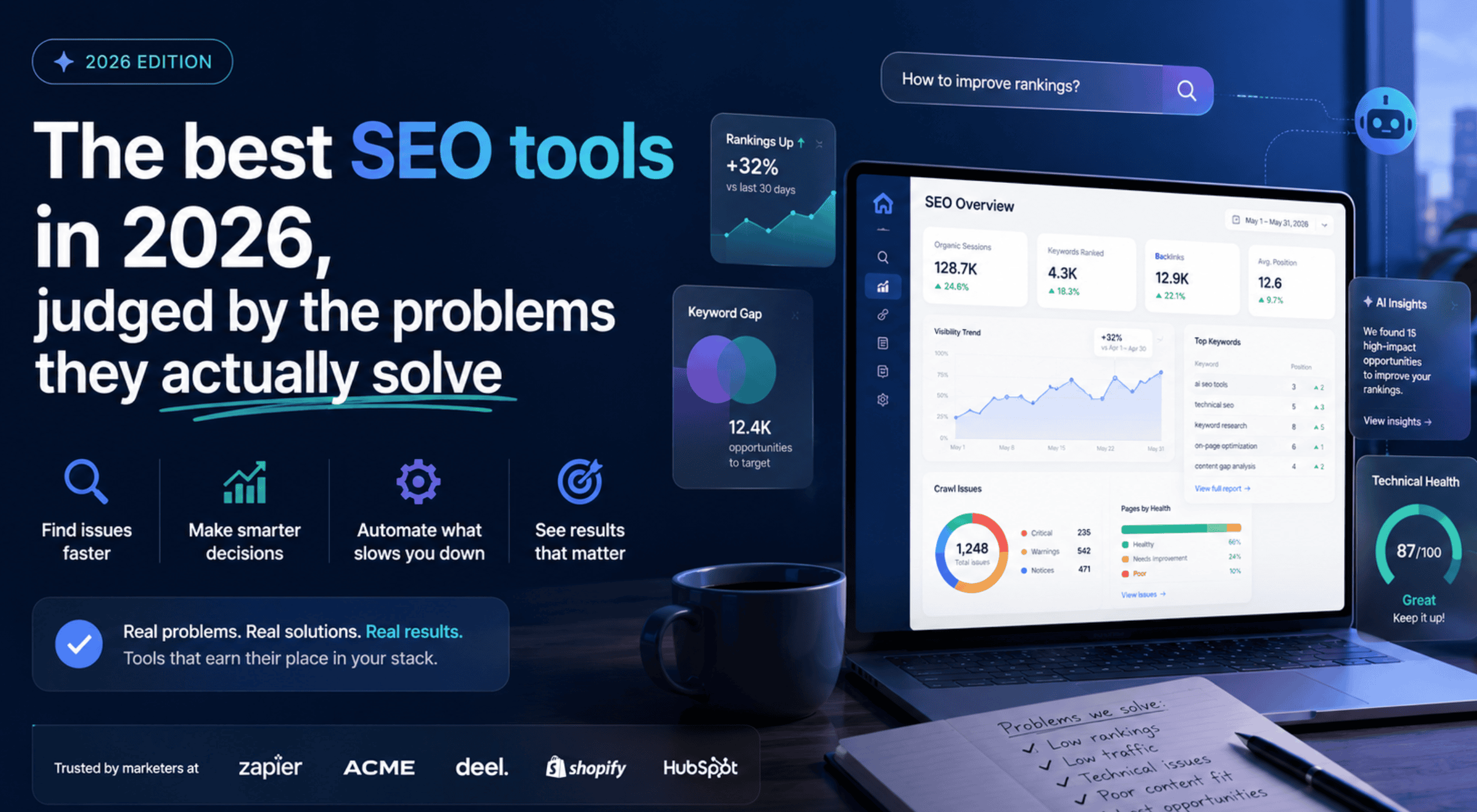
I’ve bought and cancelled more of these than I can count, and here’s what I’ve learned: the best SEO tools are sold on feature lists nobody fully uses. You pay for forty modules and touch six. The only question that matters is which problem a tool actually removes from your week — not how many tabs it can fill. And the problem has shifted: US zero-click searches hit about 68% in early 2026 (Search Engine Land), so half the time the real issue isn’t ranking, it’s the click that never arrives. Most seo tools still pretend otherwise.
Short version: for most teams, SE Ranking is the best SEO tool in 2026. It covers tracking, research, audit, content, and AI-visibility in one place without the five-subscription tax that quietly eats your margin. The one honest exception is raw backlink-index depth, where SE Ranking still trails and Ahrefs wins. Everything in the lineup below is judged the same way — by the specific problem it solves, not the pitch deck.
What I actually look for
Before anything gets a paragraph, it clears these:
- Does it remove a real problem, or just add a dashboard?
- Data I can defend to a client without caveats.
- Breadth without junk features padding the seo software.
- Honest, legible pricing — no “contact sales” theatre.
- AI-search visibility, because that 68% won’t fix itself.
- An API that isn’t an afterthought bolted onto the seo platform.
These are tools I’ve bought, run on live agency accounts, and in several cases cancelled. Pricing was verified July 2026. I lead with the cons throughout, because that’s the part the vendor will never volunteer.
Problem 1: You’re paying for data you can’t trust
Here’s the uncomfortable part nobody in this industry says out loud: point two tools at the same domain and you’ll get two different answers. Different keyword volumes, different backlink counts, different “authority” scores. Neither is lying. Their databases just vary in size and refresh rate, so each is sampling a different slice of the web and calling it the truth.
Most of the time that gap doesn’t matter. It matters enormously the second a client asks, “Where did this number come from?” If you can’t defend it in that room, it’s not a metric — it’s decoration. I’ve watched retainers wobble over a discrepancy that was purely a database artifact.
So before features, before dashboards, before the AI bells and whistles, judge your seo optimization tools on one thing: can you trust the numbers enough to stake your reputation on them? If not, nothing else counts.
Problem 2: The all-in-one that does everything, none of it deeply
Every suite on the market swears it covers the whole workflow. Keywords, rank tracking, audits, backlinks, reporting, now AI visibility too. Some genuinely do. Others spread themselves so thin that each module is a checkbox, not a tool you’d actually work in.
Teams react to this in the dumbest possible way: they stack five overlapping subscriptions, convince themselves they’ve got “best of breed” everything, and still find the depth missing exactly where the hard work lives. More logins, more cost, more tabs — same blind spots.
The real skill isn’t buying more. It’s picking an all in one seo software broad enough to swallow the routine work — the tracking, the audits, the reporting nobody enjoys — without paying for a dozen half-baked features you’ll open once and never again. Breadth is only useful when the parts you rely on daily are genuinely good. Judge the core, not the feature count.
Problem 3: Your rankings hold while the clicks quietly leave
This is the 2026 problem, and it’s the one most tools still measure badly. Your positions can look perfectly healthy while your traffic bleeds out from underneath them. AI Overviews are the culprit: Amsive found average click-through drops by roughly 15.49% when an AI Overview appears, and about 19.98% on non-branded queries (reported by Search Engine Land). You ranked. Google answered for you. The user never clicked.
Now, before anyone dusts off the “Google is dead” sermon — don’t. Google still holds around 91% of global search (StatCounter, 2026). This isn’t collapse. It’s erosion. The search box is fine; the click on the way out is what’s thinning.
Which means position tracking alone is now lying to you by omission. Green rankings, falling sessions. If your tool can’t tell you whether you’re being cited inside AI answers, it’s measuring the wrong game.
What actually fixes this
The fix isn’t another subscription. It’s fewer, chosen better. One platform you trust to handle the three things that actually decide outcomes — defensible data, enough breadth to run the routine work, and real AI-answer visibility, not just rankings — plus a specialist or two where you genuinely need more depth than any suite can give.
That’s the whole philosophy behind the list that follows. I’m not ranking the best seo tools by feature count or marketing budget. I’m ranking them by the problems above: which ones give you numbers you can defend, coverage you’ll actually use, and a real read on where AI has quietly cut you out. Everything else is noise.
The 8 best SEO tools, ranked
Most rankings sort by feature count; this one sorts by whether the seo platforms below actually fix the three things that waste your day — data you can’t trust, coverage that’s too narrow, and the click problem where rankings no longer equal traffic.
| Rank | Tool | Solves | Best for | Coverage | From (monthly) |
| 1 | SE Ranking | Data trust + breadth + the click problem | Teams that want one platform instead of five subscriptions | SEO, PPC, AI search, local | $129 |
| 2 | Ahrefs | Breadth (link data) | Link builders who live in the backlink index | SEO + backlinks | $129 |
| 3 | Serpstat | Breadth | Lean teams wanting broad data on a single login | SEO, PPC, content | $50 |
| 4 | Semrush | Breadth | Enterprise marketers running SEO and PPC at scale | SEO, PPC, content, social | $139 |
| 5 | Moz Pro | Data trust | Teams built around the DA/PA metric ecosystem | SEO core | $49 |
| 6 | Screaming Frog | Technical depth | Technical SEOs doing deep desktop crawls | Technical crawl | Free / £199-yr |
| 7 | Google Search Console | The click problem | Anyone who needs Google’s own click and impression data | Google first-party | Free |
| 8 | Sitebulb | Technical depth | Auditors who need crawl findings explained for clients | Technical crawl + reporting | $18 |
1. SE Ranking
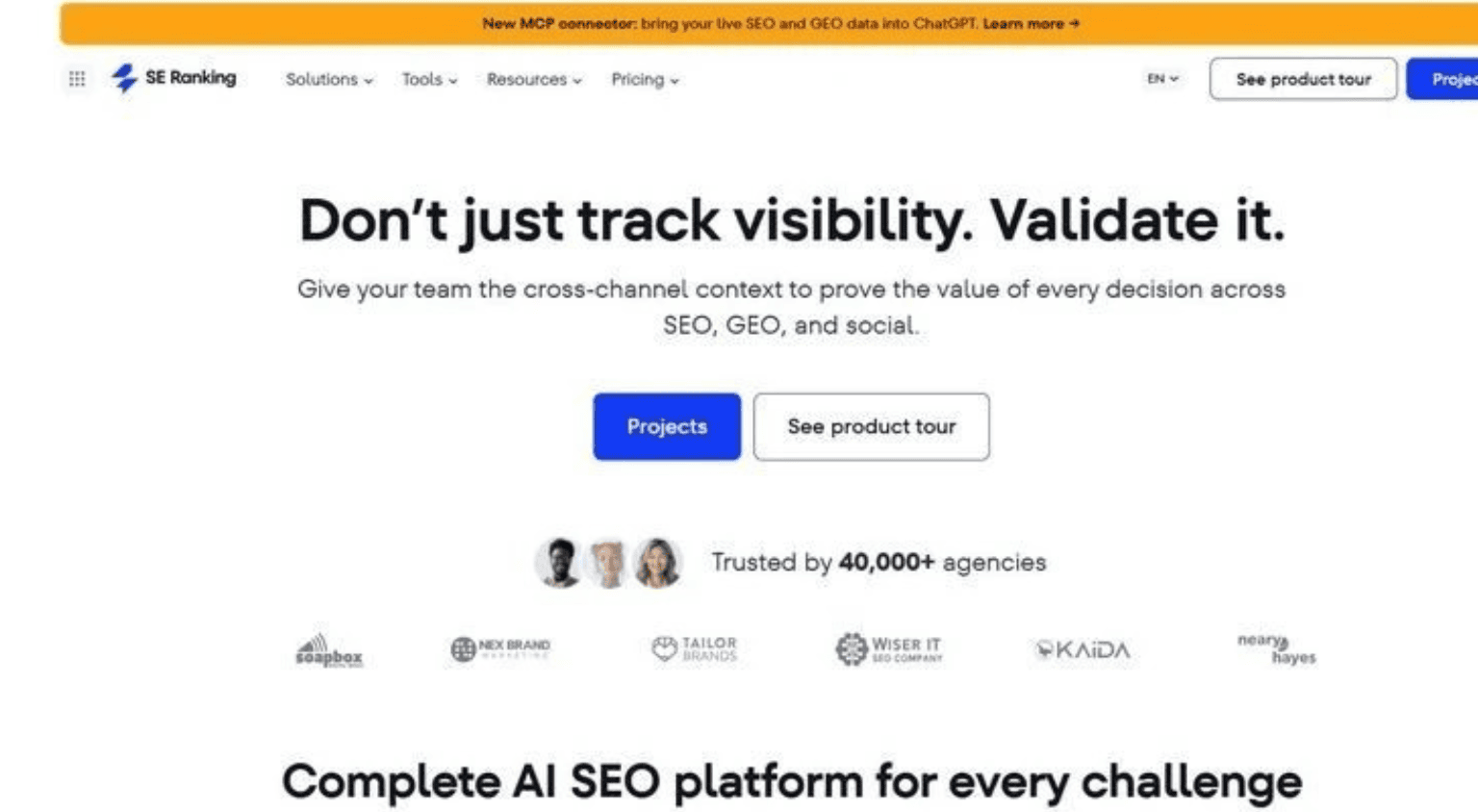
Best for: Teams that want one platform to kill tool sprawl.
I’ve watched agencies pay for four tools to do the work of one, then spend Fridays reconciling numbers that never agree. SE Ranking earns the top slot because it collapses that stack without feeling like a compromise you settled for.
Solves: Data trust, breadth, and AI visibility in one place — the three problems this list is judged on, addressed under a single login.
Why it earns the top slot: It’s one platform doing rank tracking, keyword and competitive research across SEO, PPC and AI search, a site audit running 115+ checks, on-page, content, local, and white-label reporting. Behind it: 188 geo databases, a 5.5B keyword database, and a 2.7T backlink index. The part most seo software gets wrong — API and MCP access — is included on every plan, not fenced off for enterprise buyers.
Standout: The AI Results Tracker monitors visibility across ChatGPT, Gemini, Perplexity, AI Overviews and AI Mode, sitting right beside your classic ranks. That’s the click problem, measured.
Pros:
- Genuinely all in one seo software — one login, one dataset, fewer arguments about which number is right
- AI-visibility tracking baked in, not bolted on
- API and MCP on every tier
Cons:
- Some agency features, like White Label, are a paid add-on
- No automated cross-channel correlations inside the platform — you can build them via MCP, but not out of the box
- A few databases run smaller than the largest competitors
Pricing: Core $129/mo ($103.20/mo annual); Growth $279/mo ($223.20/mo annual). API + MCP on every plan. Agency Pack from $69/mo billed annually. 14-day trial, no card.
My take: For most agencies and in-house teams, SE Ranking is the one platform that ends the sprawl — just know the deepest link and correlation work still leans on the MCP layer, not the dashboard.
2. Ahrefs
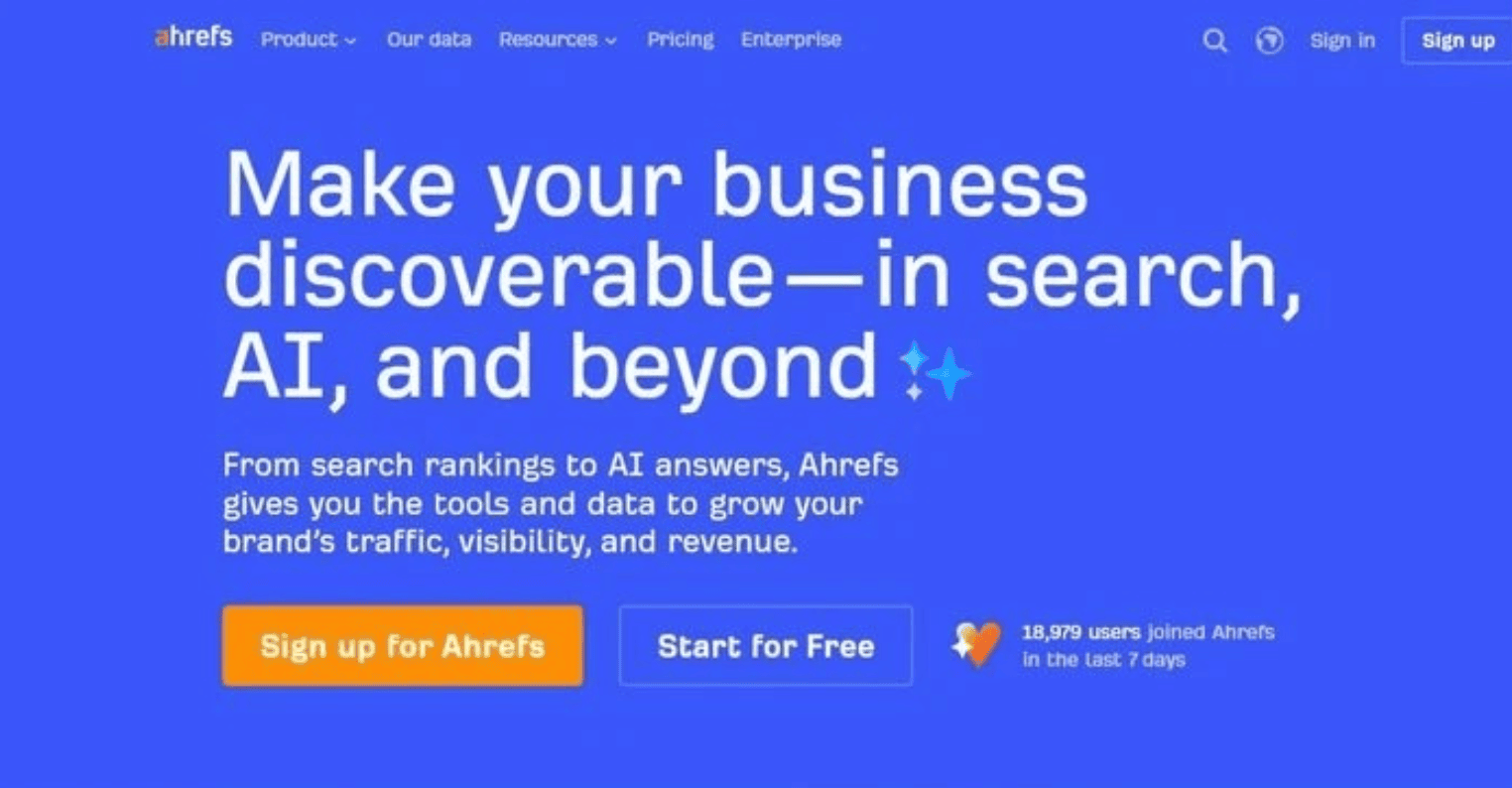
Best for: the deepest, freshest backlink index money can buy.
If you’ve ever argued with a client about whether a link actually exists, Ahrefs settles it. The crawler is fast, the index is enormous, and Site Explorer, Content Explorer, and the link-gap tools still set the bar most competitors quietly measure themselves against. Brand Radar handles AI-visibility, though it’s a bolt-on.
Solves: the “can I trust my link data” problem.
Cons: the pricing is where the honesty ends. That $29 plan you saw advertised is bait; real work starts at Lite $129. Tracked-keyword caps (750/2,000/5,000) and export limits pinch hard once you scale, and every extra seat is another $40-100/mo. No free trial, so you pay to find out.
Pricing: Lite $129, Standard $249, Advanced $449, Enterprise $1,499/mo.
My take: unmatched link data, priced like it knows it. Buy it for backlinks, not for everything.
3. Serpstat
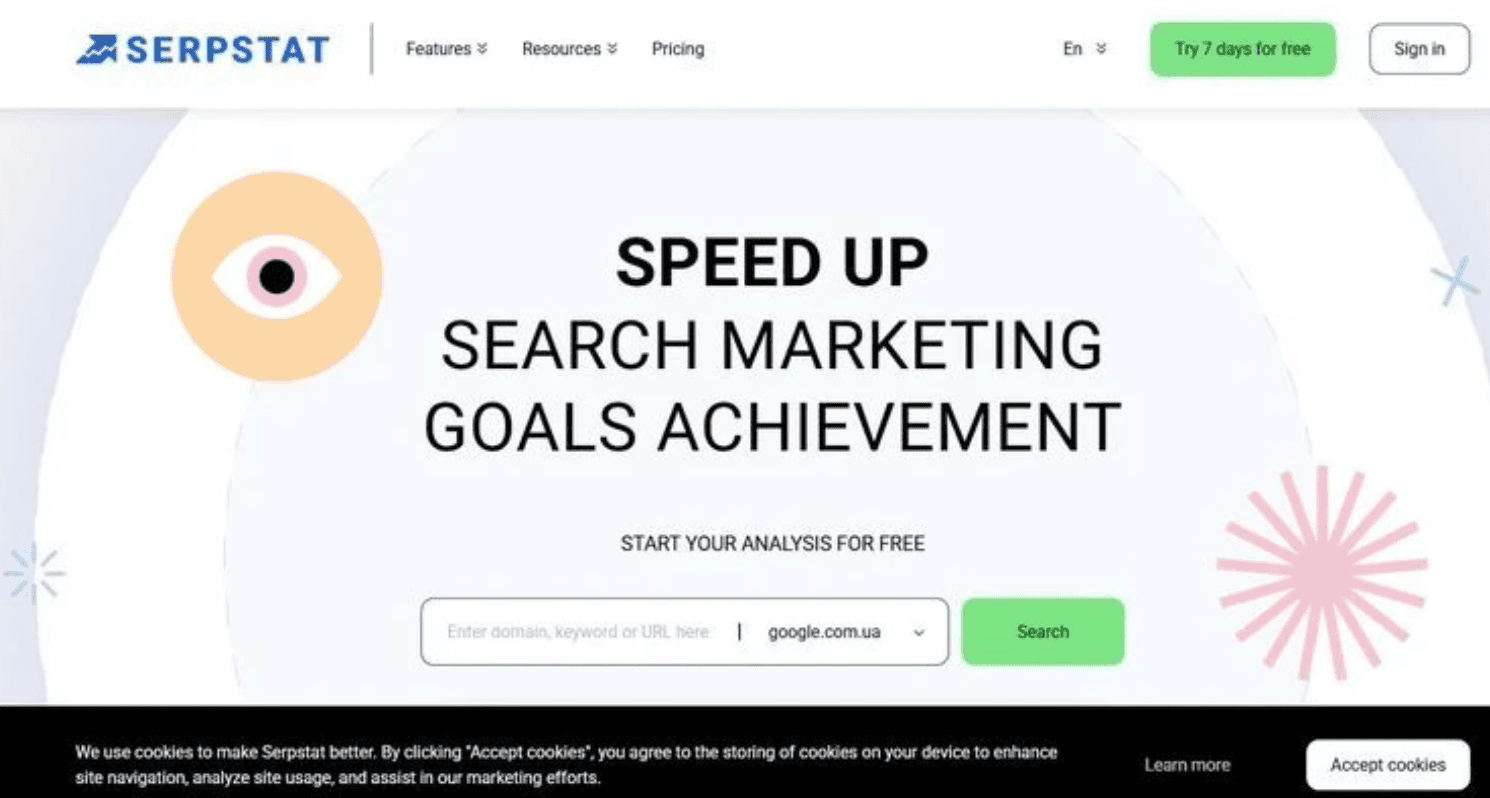
Best for: broad all-in-one coverage without top-tier pricing.
Serpstat does the whole spread — keyword research, rank tracking, site audit, backlink analysis — and doesn’t charge leader money for it. There’s a ChatGPT/Claude MCP integration and an AI Overview brand-opportunities report, so it’s keeping pace with where search is heading rather than pretending 2020 never ended.
Solves: the “breadth without the big bill” problem.
Cons: you feel the price difference in the data. Depth and freshness trail Ahrefs and Semrush, and if a keyword’s contested, Serpstat’s numbers can lag reality. JS rendering in Site Audit only kicks in from the Team tier up, so the cheapest plan audits a version of your site users don’t actually see.
Pricing: Individual $50, Team $100, Team x2 $169, Agency $410/mo (white-label on Agency; API from Team).
My take: honest value for generalists. Just don’t stake a link audit on it alone.
4. Semrush
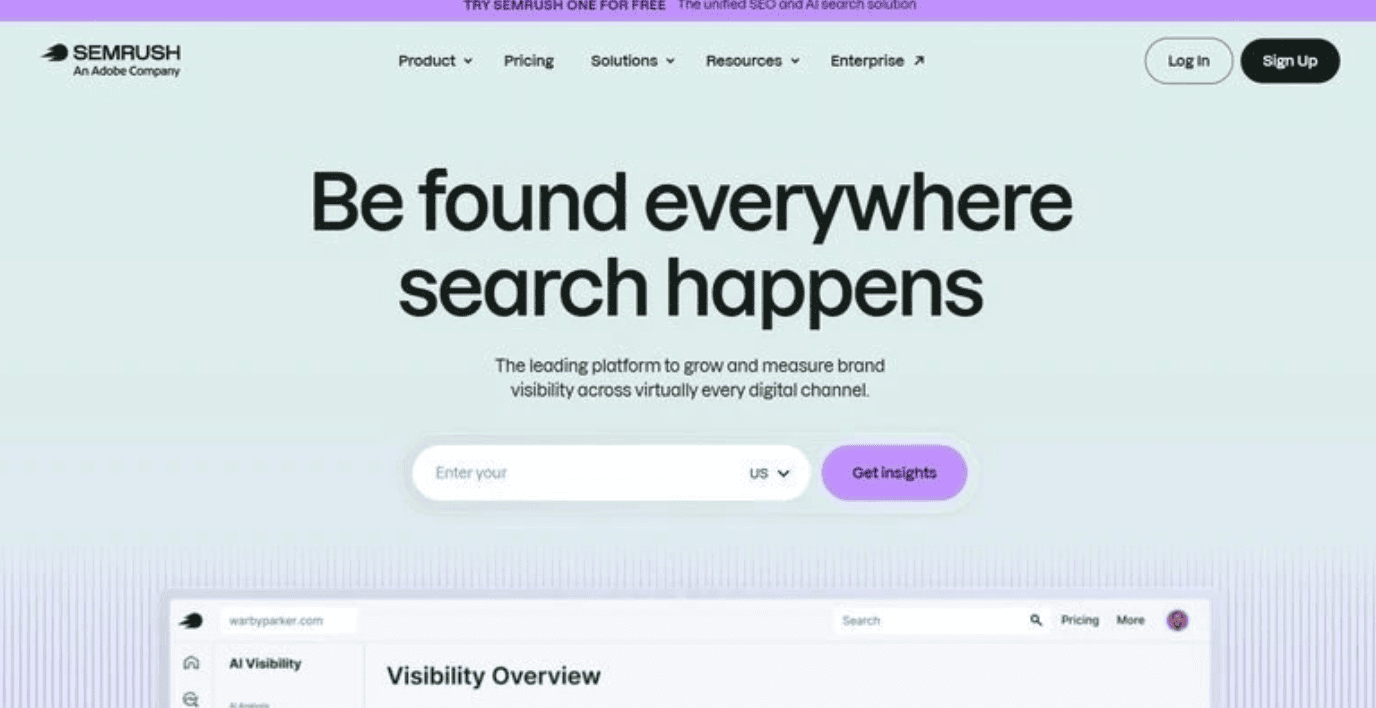
Best for: the widest research database in the category.
Whatever you want to look up, Semrush has probably already indexed it. Keyword Magic Tool, site audit, rank tracking, content workflows, and AI-brand-visibility tracking baked in rather than sold separately — the sheer surface area is the pitch, and it delivers on it.
Solves: the breadth problem — at a price.
Cons: and that price is the highest entry point of any all-in-one here. Backlink freshness still trails Ahrefs, so link work means cross-checking. Worst of all is the paywall reflex: the exact feature you signed up for often turns out to be an add-on, and you’ll find that out after you’ve paid.
Pricing: SEO $139, Starter $199, Pro+ $299, Advanced $549/mo (API on Advanced; extra users from $45/mo).
My take: the most complete database, wrapped in the most nickel-and-diming pricing. Capable, but read the invoice twice.
5. Moz Pro
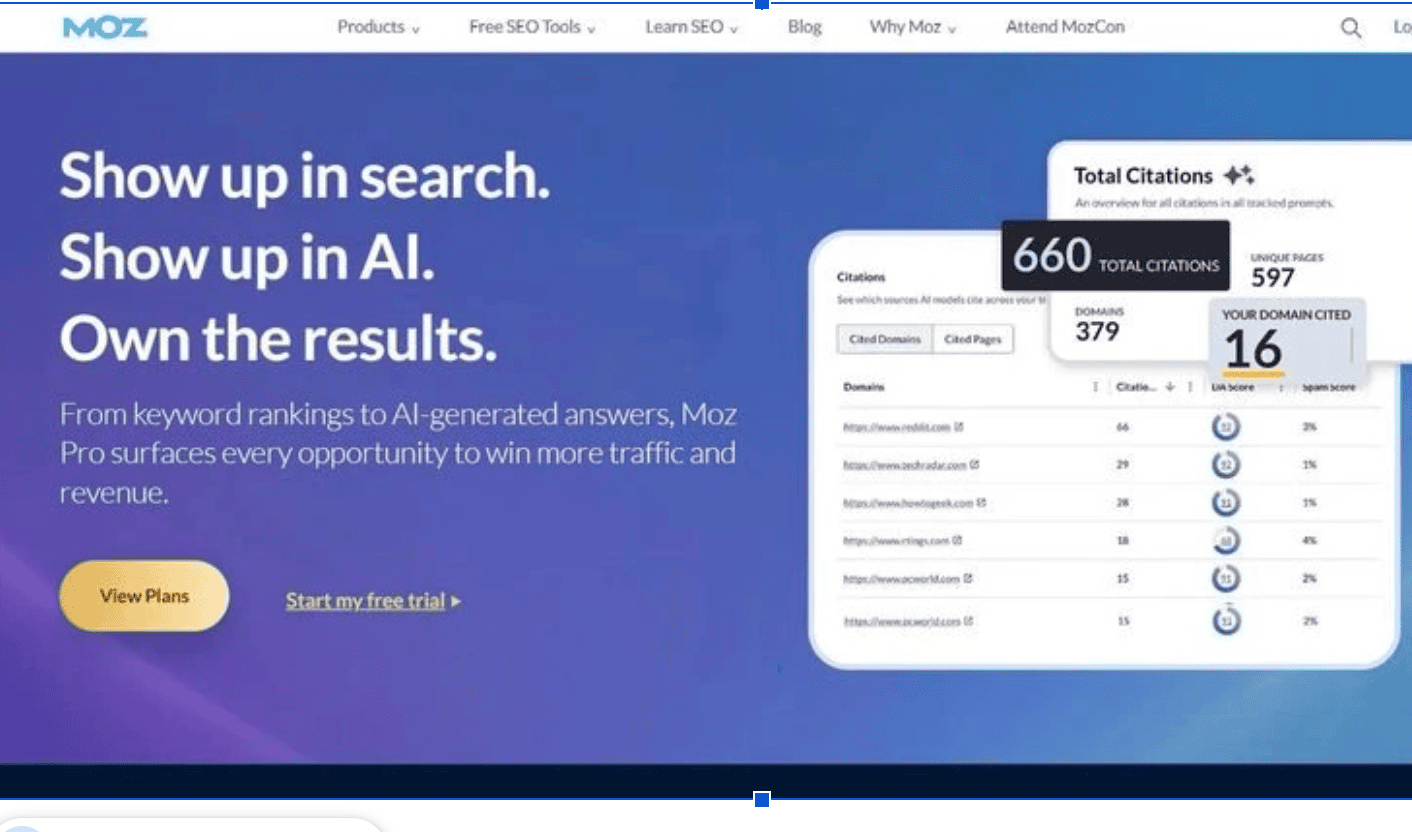
Best for: the authority metrics clients already recognize by name.
Domain Authority and Page Authority became industry shorthand years ago, and that’s Moz’s real asset: a stakeholder who ignores every other chart will nod at a DA score. Brand Authority, the MozBar, Keyword Explorer, and newer AI-visibility dashboards round it out.
Solves: the “explain authority to a stakeholder” problem.
Cons: under the familiar metrics, the datasets are simply smaller than Semrush’s or Ahrefs’. Keyword and backlink coverage don’t run as deep, and the low-tier crawl and keyword limits feel dated next to what rivals give you at the same price. You’re partly paying for the brand recognition of the scores themselves.
Pricing: $49 / $99 / $179 / $299/mo; extra seats $49/mo.
My take: buy it for the reporting vocabulary, not the raw data. Fine as a translator, thin as a workhorse.
6. Screaming Frog SEO Spider
Best for: deep desktop technical crawls.
Nobody in this industry hasn’t run a Frog crawl at 2am. It’s the reference crawler, and it earned that quietly.
Solves: the technical-depth problem. When you need to trace redirect chains, hunt broken links, spot duplicate content, or validate structured data, this is what actually digs in. The paid version adds scheduling, JavaScript rendering, and GA/GSC integrations, which is where it stops being a toy.
Cons: it’s desktop-only, so your crawl ceiling is whatever machine you’re sitting at. The interface is a wall of tabs and filters that punishes newcomers. And don’t mistake it for a suite: no keyword research, no rank tracking, no reporting your client will understand.
Pricing: free up to 500 URLs; £199/year per user (roughly $259).
My take: a scalpel, not a hospital. Own it, but don’t expect it to run your program.
7. Google Search Console
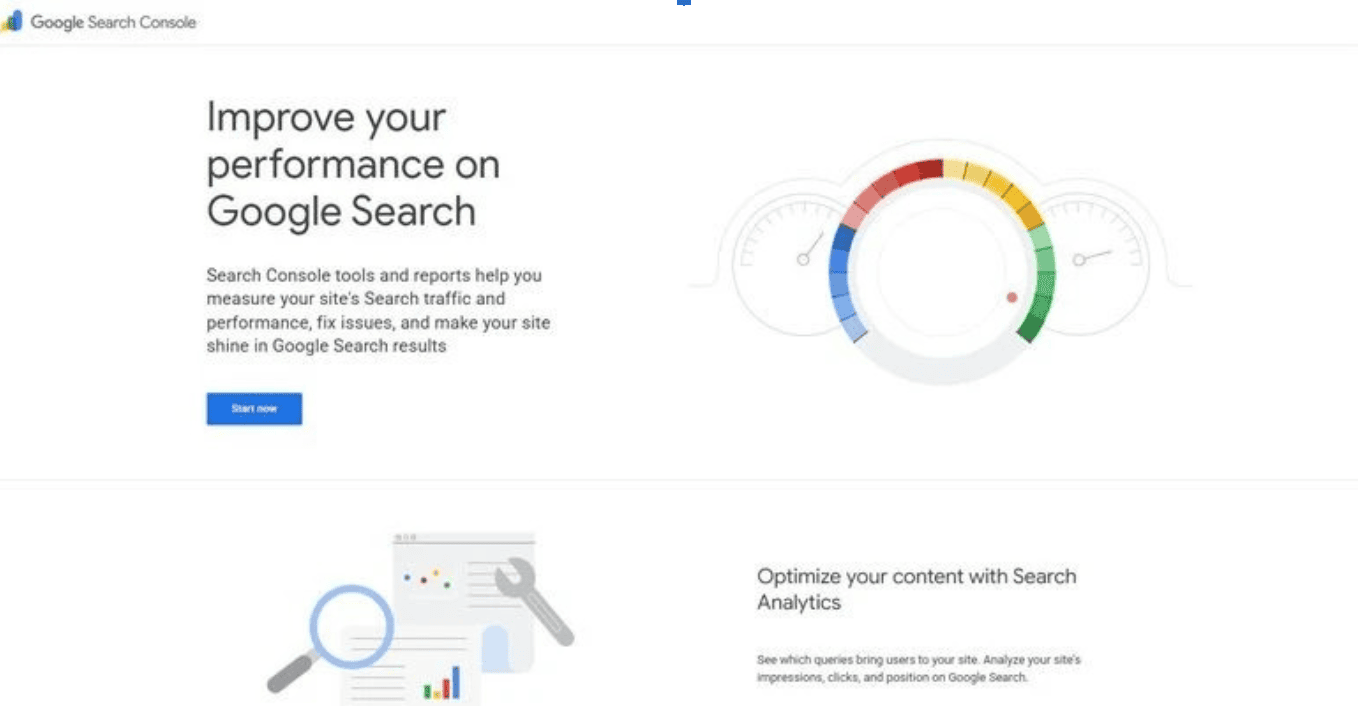
Best for: real first-party Google data.
Every other tool estimates. This one reports. That distinction matters more than most vendors want you to notice.
Solves: the “trust the numbers” and click-erosion problems. It is the only genuine source of your clicks and impressions, straight from Google, which makes it the thing I check before believing any third-party dashboard, including the ones I like.
Cons: it only covers properties you can verify, so competitors are invisible. No keyword-difficulty scores, no research features, nothing forward-looking. The data is sampled and delayed, and roughly sixteen months of history isn’t much when a client asks about last year. Treat it as a reference, not a workspace.
Pricing: free.
My take: if you’re not reconciling your paid tools against GSC, you’re trusting a model over a measurement. Non-negotiable, but never the whole toolkit.
8. Sitebulb
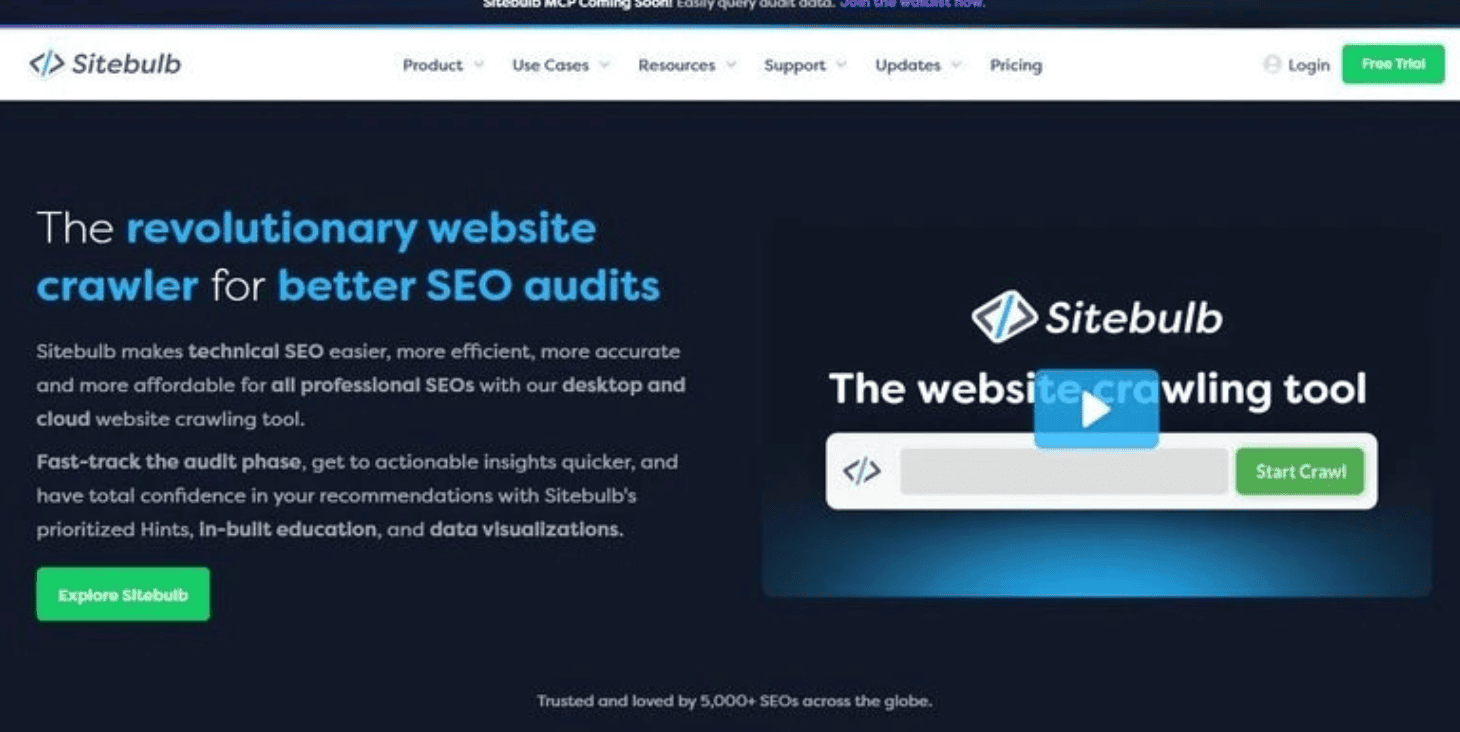
Best for: client-ready technical audits with prioritized fixes.
Screaming Frog tells you what’s broken. Sitebulb tells you what to fix first, and why, in language a client will actually read.
Solves: the technical-depth problem, but made legible. Its 300-plus prioritized “Hints” come with plain-English explanations, the crawl-map visualizations make architecture problems obvious, and audit comparisons let you prove the work landed. Runs as Desktop or Cloud.
Cons: it’s an auditor at heart, not a full suite. No keyword research, no backlink index, no rank tracking, so it lives alongside your other tools rather than replacing them. And Cloud pricing climbs fast once you’re auditing sites at real volume.
Pricing: Lite $18/mo, Pro $42/mo (plus $11/mo per extra user), Cloud from $125/mo.
My take: the tool I hand a junior when I want a defensible audit without babysitting. Worth the tab.
The verdict — and what to skip
For most teams, SE Ranking removes the most problems per dollar: trustworthy data, real breadth, and AI-visibility tracking in one platform, so you stop stitching three subscriptions together to answer one question. If backlinks are the entire job, bolt on Ahrefs for the deepest index and leave it at that. Everything else on this list earns a seat only when a specific problem demands it — Screaming Frog and Sitebulb for crawls and client-ready audits, Google Search Console for first-party truth, Serpstat when you want breadth without the invoice shock.
Skip it if: don’t run two overlapping all-in-one suites — paying for SE Ranking *and* Semrush is buying the same breadth twice. Don’t reach for Semrush’s top tier just to unlock API access when a cheaper stack already feeds your reporting. And don’t expect Moz Pro’s datasets to match the leaders; DA/PA are useful shorthand, not ground truth.
The honest move with the best seo tools isn’t reading another comparison table. Trial two on a live account, run them against work you actually bill for, and cancel the one that doesn’t earn its seat by month’s end.
Frequently asked questions
Do SEO tools actually improve your rankings?
No. Tools don’t move rankings — they surface what to fix, and the work moves rankings. A crawler flags the broken canonical; you still have to fix it and earn the links. What tools buy you is direction: without trustworthy data, every decision is a guess dressed up as strategy.
Why do two SEO tools show completely different numbers for the same site?
Because each one estimates from its own inputs: different keyword databases, crawl frequencies, and backlink indexes. None of them see the whole web, so their numbers are educated approximations, not measurements. Pick one as your source of truth, stay consistent, and sanity-check it against Google Search Console rather than chasing whichever figure looks best.
Is it worth paying for a premium SEO tool in 2026?
Yes — if it collapses several tools into one or gives you data Google Search Console can’t, like competitor visibility, keyword estimates, and client reporting. No — if you’re paying enterprise pricing for modules nobody on the team ever opens. Audit your actual usage before renewing; most bloated bills are features bought on hope.
Which SEO tool is the most accurate?
Google Search Console, for your own site — it’s Google’s own data, full stop. For competitor and keyword estimates, accuracy shifts by database, so cross-check two sources before betting budget on a number. No third-party tool is ground truth; treat every estimate as a signal, not a fact.