
Get Paid for Ads: A 30-Day Plan for a Small Site
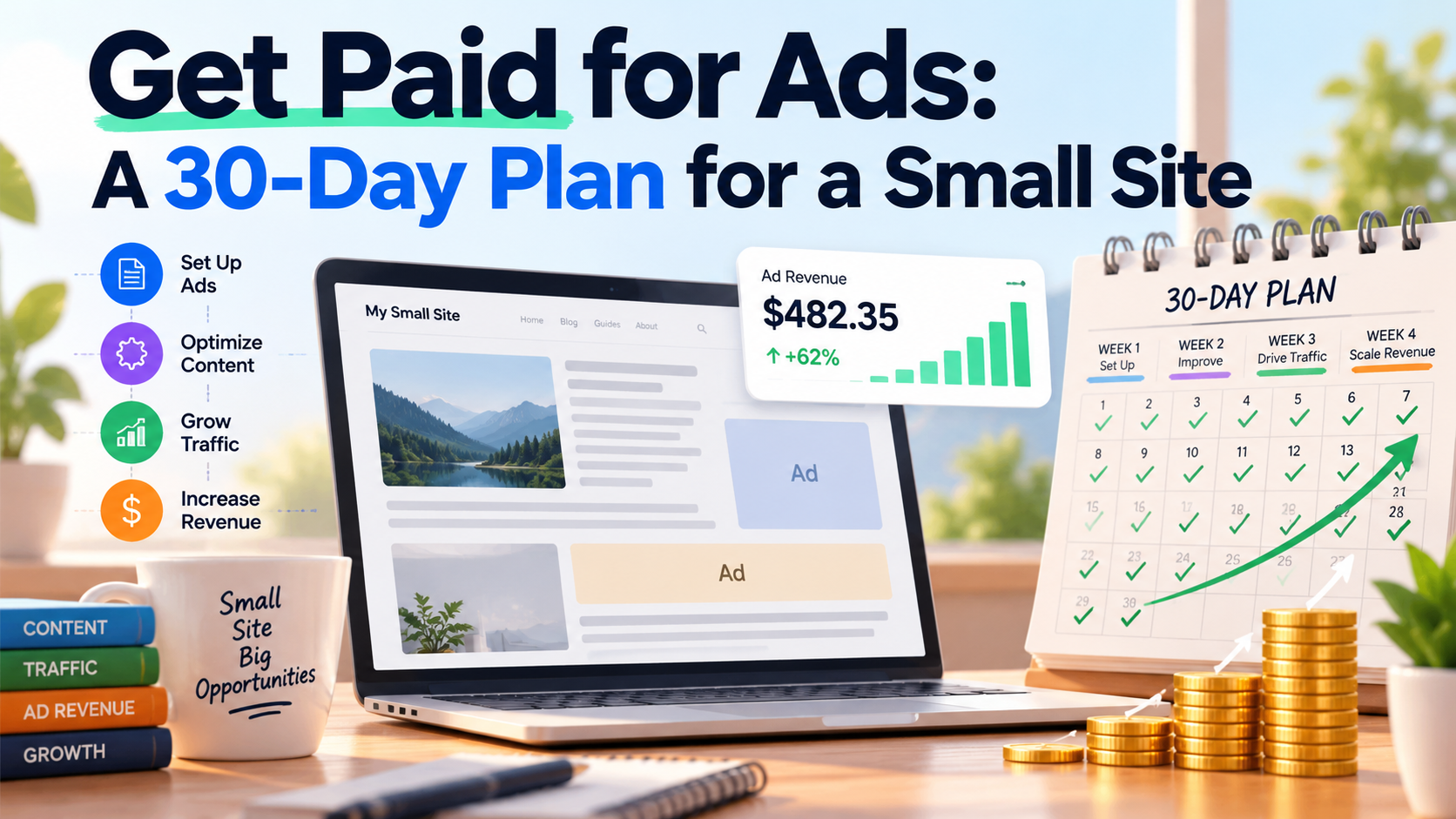
Get Paid for Ads: A 30-Day Plan for a Small Site
Hosting ads on your own site is one of the most direct ways to get paid for ads, and it works at almost any size. The catch is sequence. Owners who try everything in week one end up with cluttered pages and no idea which change helped. Owners who add one thing at a time end the month knowing exactly what their audience responds to. Here’s a month, broken into four moves.
The 30-Day Plan
Each week has one job. Finish it before starting the next.
Week 1: Put One Ad Format Live
Register with an ad network as a publisher, add your site, and wait for review. Networks typically look at traffic, the amount of content, and your niche, though Adsterra accepts publishers of any traffic size. Once approved, choose a single format. Native Banners let you set the block size, colors, and font sizes to match your layout. Popunder needs no space on the page. Social Bar suits mobile-heavy audiences, and Smartlink works in text, buttons, and images, so it’s the one to pick if your traffic comes from social profiles and not from a website.
Place the code, resist the urge to add more, and leave it running.
Week 2: Read the Dashboard
Now the statistics start to mean something. Your account shows an eCPM, meaning revenue per 1,000 ad impressions, and it moves with the season, the placement, and advertiser demand in your visitors’ country. Compare positions, such as a Native Banner near the beginning of an article versus one near the end, or a 300x250 banner versus a 320x50. Change one variable per test, and don’t flood the page, since ads that annoy readers cost you the visits that make them valuable.
Week 3: Add a Second Income Line
This is where affiliate links come in. You register on an affiliate platform, generate a unique tracked link, and place it in a post. A reader clicks, buys from the retailer, and you receive a percentage of that sale. Review posts and comparison articles are the natural home, because the reader is already deciding.
Week 4: Build a Media Kit
By now you have a month of traffic data. Put it on one page: monthly views, number of users, audience details, and a contact address. Brands use that page to decide whether to sponsor you, and sponsored posts can be priced per post or per word, or paired with a commission on resulting sales.
The Plan at a Glance
|
Week |
Focus |
What you’ll know by the end |
|
1 |
One ad format live |
Whether the code works and how the page looks |
|
2 |
Dashboard and placement tests |
Which position gives the best eCPM |
|
3 |
Affiliate links |
Which posts send readers to buy |
|
4 |
Media kit |
What your traffic is worth to a sponsor |
The order is deliberate. Each week produces the data the next one needs: placement results show which pages deserve affiliate links, and affiliate results show which topics a sponsor will care about.
What Payouts Look Like
Adsterra processes publisher payouts twice a month, with minimum payouts starting at $5 for eligible payment methods. Some publishers report daily earnings of $50 to $800 or more, though results vary with traffic volume, quality, GEO, and ad format. Traffic that performs well for advertisers may lift eCPM, which makes the week-two tests worth the effort.
FAQ
How soon can I get paid for ads after setting up?
Payouts run twice a month, and withdrawals can start from a $5 balance, so the timing depends on how quickly your traffic reaches that point.
Do I need a website to get paid for ads?
Not always. Smartlink can be placed in social profiles, comments, and similar spots without a dedicated site.
Should I start with affiliate links or sponsored posts?
Affiliate links, in most cases. They need no negotiation, and the traffic data you collect along the way becomes the media kit that makes sponsored posts easier to land.